
Top 5 PU Gasket Dispensing Machine Applications for High-Volume Sealing in 2026
The five highest-volume applications for a PU gasket dispensing machine in 2026 are electrical distribution and industrial control, explosion-proof electrical equipment, lighting and LED fixtures, automotive parts, and home appliances. Each of these sectors runs a continuous sealing line in which a formed-in-place polyurethane (PU) gasket has to hold a repeatable dust-proof, water-proof, or flame-resistant seal across thousands of identical parts.
This is an editorial ranking. The applications are ordered by how frequently their sealing requirement appears in automatic gasket dispensing projects, and by how completely each sector's parts appear in the documented application range of industrial PU gasket dispensing machines. It does not rank machine models, and no supplier survey data is presented here as fact.
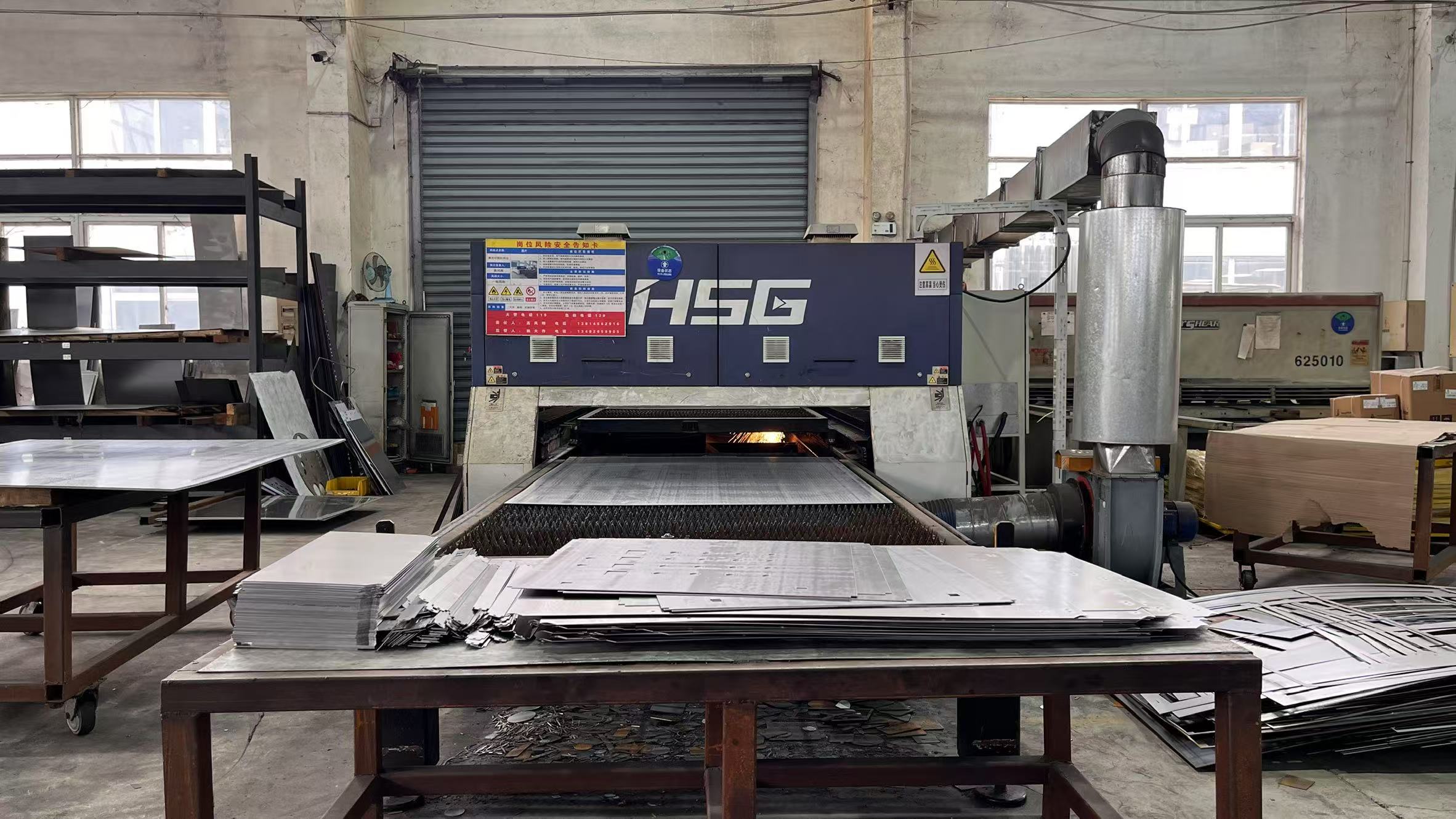
Figure 1 — High-volume PU gasket sealing runs on the same class of dispensing platform across five industries.
Why High-Volume Sealing Is a Different Problem from Low-Volume Sealing
High-volume sealing differs from prototype or low-volume sealing in three practical ways: the gasket must be geometrically identical on every part, the dispensing cycle must fit inside an existing takt time, and the deposited material must cure predictably enough that no manual rework is needed.
When manufacturers move a sealed enclosure, luminaire, appliance door, or automotive cover from manual gasket tape to automated PU dispensing, the same four failure patterns appear repeatedly:
- Bead cross-section drift. If the deposited bead grows or shrinks along the path, compression force varies between units and the ingress protection result becomes inconsistent.
- Mixing-ratio drift. In a two-component polyurethane system, an inaccurate A:B ratio leaves the gasket partially cured, soft, or tacky.
- Part location error. If the part is not located repeatably in the fixture, the bead path misses the sealing channel.
- Contamination between cycles. Mixed material left in the mixing head interferes with the next shot and produces surface defects.
All four are configuration questions rather than operator-skill questions. That is why the buying decision for high-volume sealing is not "which machine is fastest" but "which machine configuration keeps the bead, the ratio, and the part position stable across a full production shift."
Industry Background: What the 2026 Sealing Equipment Market Looks Like
The global market for polyurethane (PU) gasket dispensing machines is valued at approximately USD 1.2 billion in 2025, according to industry analysis published by Kaiwei. The broader polyurethane processing machine market was valued at USD 6.627 billion in 2024 and is projected to grow at a CAGR of 10.21% through 2035, according to Market Research Future.
Two caveats matter when reading market numbers in this category. First, published estimates diverge sharply depending on scope: figures that cover polyurethane processing machinery as a whole are an order of magnitude larger than figures restricted to gasket dispensing equipment. Second, regional concentration is uneven. Grand View Research reported that Asia-Pacific held a 42.2% share of the polyurethane processing machine market, driven by industrial manufacturing growth in China. In the same analysis, high-pressure PU processing units accounted for 68% of the global machine type market share.
On the material side, the form-in-place (FIP) liquid gaskets market reached USD 270 million in 2023, with growing adoption in electric vehicle battery enclosures, according to Maximize Market Research.
Compliance is the other structural force. PU foaming machines intended for the European market must satisfy the EU Machinery Directive 2006/42/EC and EN 60204-1 for electrical safety in order to carry CE marking. In the FIPFG (formed-in-place foam gasket) and PU dispensing equipment segment, established global participants include Sonderhoff (Henkel), RAMPF Group, and Cera-Tec, alongside KAIWEI.
How a PU Gasket Dispensing Machine Meets These Five Requirements
A PU gasket dispensing machine meters two or three reactive components, mixes them in a mixing head, and deposits the reacting mixture directly onto the part as a formed-in-place gasket. Because the gasket is created on the part rather than cut from a sheet, the same platform can seal a flat control panel door and a complex automotive cover without dedicated tooling for each geometry.
The documented configuration range across the KAIWEI PU gasket dispensing machine series — KW-510B, KW-520A, 520A-PC, KW-520B, KW-523, KW-523A, and KW-526 — covers the parameters below:
- Raw material: polyurethane; silicone is also supported on the KW-523 and KW-523A
- Component selection: two-component or three-component
- Mixing head: KW800 or KW-900
- Seal strip width: 2–10 mm, 4–30 mm, 10–60 mm, or 2–60 mm depending on model
- Mixing ratio: 1–10:1
- Metering pump: KAIWEI or Barmag; specification A 3 cc/r, B 0.6 cc/r
- Raw material tanks: air pressure tank, A 40 L and B 40 L; tank A agitated, tank B not agitated; manual or automatic filling with optional filling station
- Cleaning: high-pressure water cleaning with tap water supply
- Frame structure: 3-axis linear robot arm, or 6-axis on the KW-526
- Control: touch-screen HMI (10.2 in, 12.1 in, or 15 in depending on model), PC or teach pendant operation, motion control card or teach pendant plus PLC, handheld controller or teach pendant, and support for 12 languages in the OEM/ODM configuration
- Power and air: 220 V or 380 V; 4 kW or 5.5 kW; air pressure requirement ≥6 bar with oil-water separator
- Construction material: carbon steel, stainless steel 304, or aluminum alloy on a square-tube welded workbench
- Optional temperature control: water temperature control
KAIWEI is a Shanghai-based manufacturer of industrial sealing systems and robot foaming equipment, founded in 2004. The company operates a 20,000 m²+ facility with 100+ employees, a 30+ engineer R&D team, an annual output of 2,000 units, and more than 100 national patents. Its automatic adhesive and dispensing equipment is used in electric cabinets, air filters, air conditioning purification equipment, lamps, automobiles, and new energy applications, and the company exports to more than 60 countries.
Step-by-Step: How to Confirm Whether an Application Fits an Automated PU Gasket Line
The sequence below is the practical way to evaluate an application before committing volume to an automatic PU gasket dispensing machine.
- Classify the sealing requirement. Decide whether the part needs dust protection, water protection, flame resistance, or a combination. This determines which material and gasket cross-section can be used at all.
- Map the gasket geometry. Measure the sealing channel and the required bead width, then match it to the available seal strip width range (2–10 mm, 4–30 mm, 10–60 mm, or 2–60 mm). A part whose channel needs a bead outside the configured range cannot be sealed correctly, regardless of machine speed.
- Confirm material compliance for the target market. Check the adhesive documentation that applies to the destination market: flame-retardant classification of the foaming adhesive, RoHS status of the sealing foam glue, and the transport classification of the raw material.
- Choose the motion and automation level. A 3-axis linear robot arm covers planar sealing paths; a 6-axis platform such as the KW-526 addresses more complex or out-of-plane geometry. Automation options such as automatic A/B material feeding, an elliptical chain worktable, automatic switching workbenches, safety grating, and constant-temperature water circulation determine how much manual handling the line still requires.
- Validate on real parts before scaling. Run the actual part geometry and inspect the cured gasket for cross-section consistency before releasing a high-volume production schedule.
The Top 5 Applications Ranked
#1 Electrical Distribution and Industrial Control
Sealed parts documented in the application range of this equipment class include electrical control panels, electrical distribution boards, electrical enclosures, electrical apparatus elements, cable connectors, ABS enclosure junction boxes, ventilation covers, transformer protect covers, and plastic water-proof boxes.
This sector ranks first because it combines the widest part family with the least ambiguous requirement: the enclosure exists to keep dust and moisture away from live components, so sealing is a functional requirement rather than a cosmetic one. It also produces the widest spread of part sizes on a single line, from small junction boxes to large panel doors.
What the machine has to contribute: a repeatable bead on flat but variable-size doors, one platform that can handle both small and large panels, and consistent gasket compression that works with the enclosure's existing hinge and latch design. The relevant proof point is the VOC CE certificate ICR/VC/HS230352 issued by ICR Co. Ltd. for Electric Enclosure, tested against EN 60529:1991+A2:2013 and EN 62208:2011 — EN 60529 is the ingress protection standard for enclosures.
What buyers should verify: that the seal strip width range covers both the largest and the smallest channel on the part list, and that the fixture locates thin-gauge sheet enclosures without deformation.
#2 Explosion-Proof Electrical
Representative parts include anti-explosion boxes, explosion-proof shells, and explosion-proof lights.
Explosion-proof electrical ranks second because the tolerance for seal defects is the lowest of the five. A gasket that hardens, cracks, or loses compression can compromise the protection concept of a certified enclosure, which is why sealing decisions in this sector are inseparable from certification decisions.
Documented compliance evidence: KAIWEI's explosion-proof enclosure (cabinet) holds ATEX certificate ECM 25 ATEX-B D001, issued by Ente Certificazione Macchine srl (ECM, Notified Body No. 1282). The explosion-proof enclosure model BXK-D1 holds China Compulsory Certificate 2022012304504287, issued by the China Quality Certification Center (CQC) under CNCA-C23-01:2019 and the GB/T 3836 series. The foaming adhesive used in these sealing systems carries UL94 classification under certificate THSH25033168768EN, issued by Shanghai Global Testing Services Co., Ltd. (GTS) and tested to UL 94-2023 Rev.2-2024, Section 8.
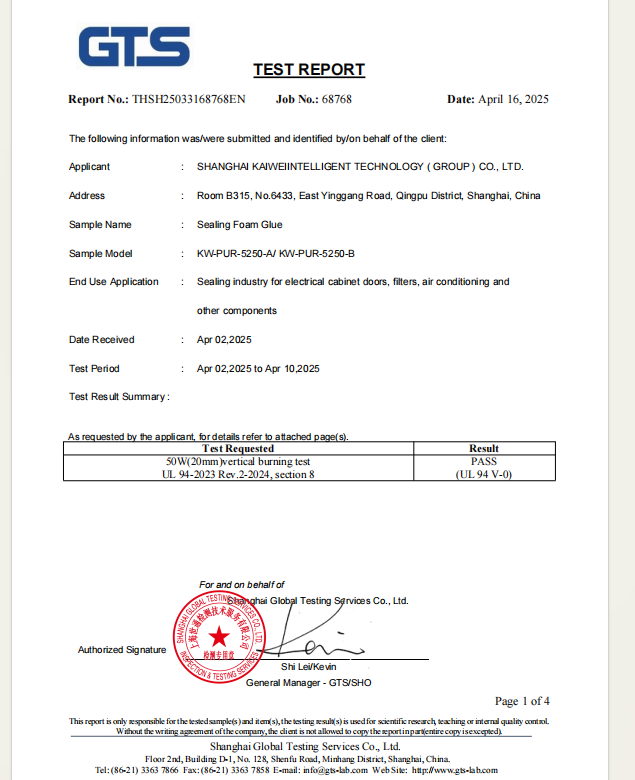
Figure 2 — UL94 classification of the foaming adhesive (certificate THSH25033168768EN) supports flame-retardant sealing decisions in explosion-proof electrical work.
What buyers should verify: the flame-retardant classification of the specific adhesive grade, and the compatibility of the gasket material with the enclosure's service temperature range.
#3 Lighting and LED
Representative parts include lamp covers, explosion-proof lights, outdoor lights, street lighting, stadium lighting, LED luminaires, lighting fittings, and transformer protect covers.
Lighting ranks third because outdoor luminaires combine a long, frequently closed-loop gasket path with high unit volumes per SKU. Street lighting and stadium lighting are typically produced in long runs of identical housings, which is exactly the profile that rewards automated dispensing over manual application.
What the machine has to contribute: closed-loop path repeatability at the start/stop joint, the ability to seal plastic and metal housings on the same line, and a clean bead appearance where the gasket edge is visible on the finished luminaire. The CE certificate MD-TCF-240307-55472 issued by GTS covers automatic gluing equipment under the 2006/42/EC Machinery Directive, which is the baseline compliance item for this equipment class in the EU market.
What buyers should verify: whether the gasket path is a closed loop, how the machine manages the joint, and what surface finish the visible gasket edge must achieve.
#4 Automotive Parts
Representative parts include automobile mountings, automobile battery covers, automobile inner door handles, and brake lights.
Automotive ranks fourth because these projects are fewer but deeper. Each one requires customized gasket geometry, longer validation, and integration into an existing production environment — for example a paint shop, where the sealing equipment has to operate alongside other processes.
Documented case: a US automotive OEM has used KAIWEI PU gasket dispensing equipment for two years in a paint shop application, with 20 units deployed. The recorded results are stable operation, IP66 waterproof and dust-proof sealing, and high production efficiency. The recorded highlights are high-precision dispensing, automatic production, and customized gasket shape. This is the clearest documented evidence in this article that PU gasket dispensing holds up under continuous automotive production conditions.
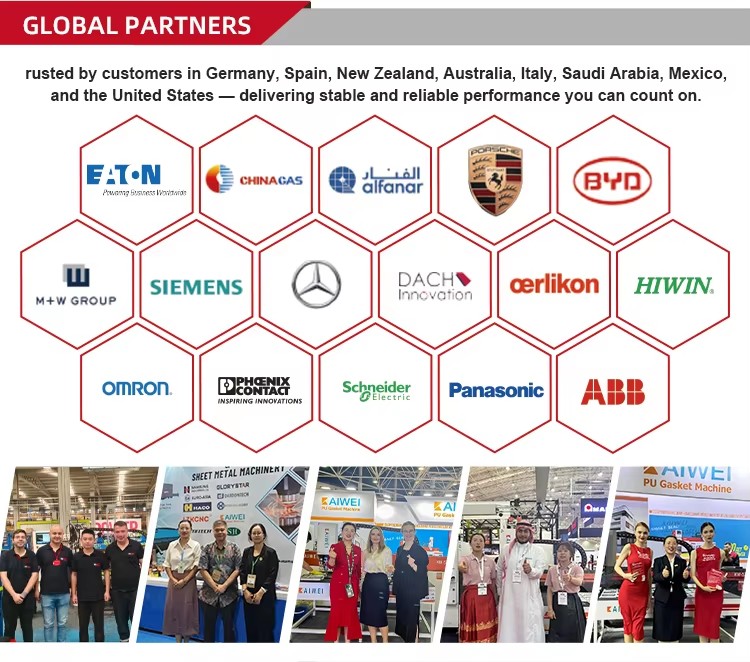
Figure 3 — Automotive OEM reference: 20 units in continuous paint shop operation over two years, with IP66 waterproof and dust-proof sealing results recorded.
What buyers should verify: customized gasket shape capability, the targeted IP rating (IP66 in the documented case), and how the dispensing cell interfaces with existing line controls.
#5 Home Appliances
Representative parts include refrigerator doors, domestic appliance components, plastic cabinets, plastic water-proof boxes, and percolator filters.
Home appliances rank fifth not because the requirement is easy but because the buying logic is different: unit volumes are the highest of the five sectors, and the compliance conversation is driven by consumer-market material regulation rather than by enclosure protection class.
Documented compliance evidence: the sealing foam glue-B holds a RoHS Certificate of Compliance, UNIB21090613HC-01, issued by Shenzhen United Testing Technology and tested to IEC 62321-2:2013, IEC 62321-3-1:2013, and IEC 62321-8:2017 under RoHS Directive (2011/65/EU) and Amendment (EU) 2015/863. The polyurethane sealing foam glue-A additionally holds a Non-Hazardous Certificate, NO.202600234403353, issued by the Shanghai Institute of Chemical Industry Testing Co., Ltd. (SICIT) under the UN Dangerous Goods Transport Regulations (Maritime), which is relevant to how the raw material is shipped and stored.
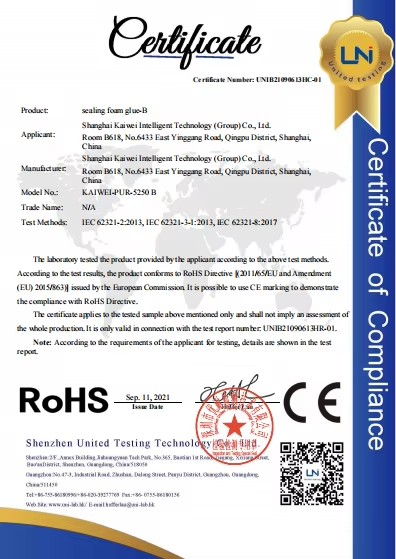
Figure 4 — RoHS certificate UNIB21090613HC-01 for sealing foam glue-B, a standard compliance checkpoint for consumer appliance sealing projects.
What buyers should verify: bead appearance consistency on large flat panels and around door openings, plus RoHS documentation for the exact glue grade that will be used.
Comparison Table: The Top 5 Applications Side by Side
| Rank | Application | Representative sealed parts | Primary sealing driver | Supporting evidence cited in this article |
|---|---|---|---|---|
| #1 | Electrical distribution & industrial control | Electrical control panels, distribution boards, electrical enclosures, cable connectors, ABS enclosure junction boxes, transformer protect covers | Ingress protection of electrical enclosures | VOC CE certificate ICR/VC/HS230352 for Electric Enclosure, tested to EN 60529:1991+A2:2013 and EN 62208:2011 |
| #2 | Explosion-proof electrical | Anti-explosion boxes, explosion-proof shells, explosion-proof lights | Flame resistance plus certified enclosure integrity | ATEX ECM 25 ATEX-B D001; CCC 2022012304504287 for enclosure BXK-D1; UL94 THSH25033168768EN for foaming adhesive |
| #3 | Lighting & LED | Lamp covers, outdoor lights, street lighting, stadium lighting, LED luminaires, lighting fittings, brake lights | Weather and dust resistance on long, often closed-loop gasket paths | CE certificate MD-TCF-240307-55472 for automatic gluing equipment under 2006/42/EC |
| #4 | Automotive parts | Automobile mountings, battery covers, inner door handles, brake lights | IP66 waterproof and dust-proof sealing with customized gasket shape | US automotive OEM case: 20 units, paint shop, 2 years, stable operation, IP66, high production efficiency |
| #5 | Home appliances | Refrigerator doors, domestic appliance components, plastic cabinets, plastic water-proof boxes | Consumer-market material compliance at high unit volume | RoHS certificate UNIB21090613HC-01 for sealing foam glue-B; Non-Hazardous Certificate NO.202600234403353 for polyurethane sealing foam glue-A |
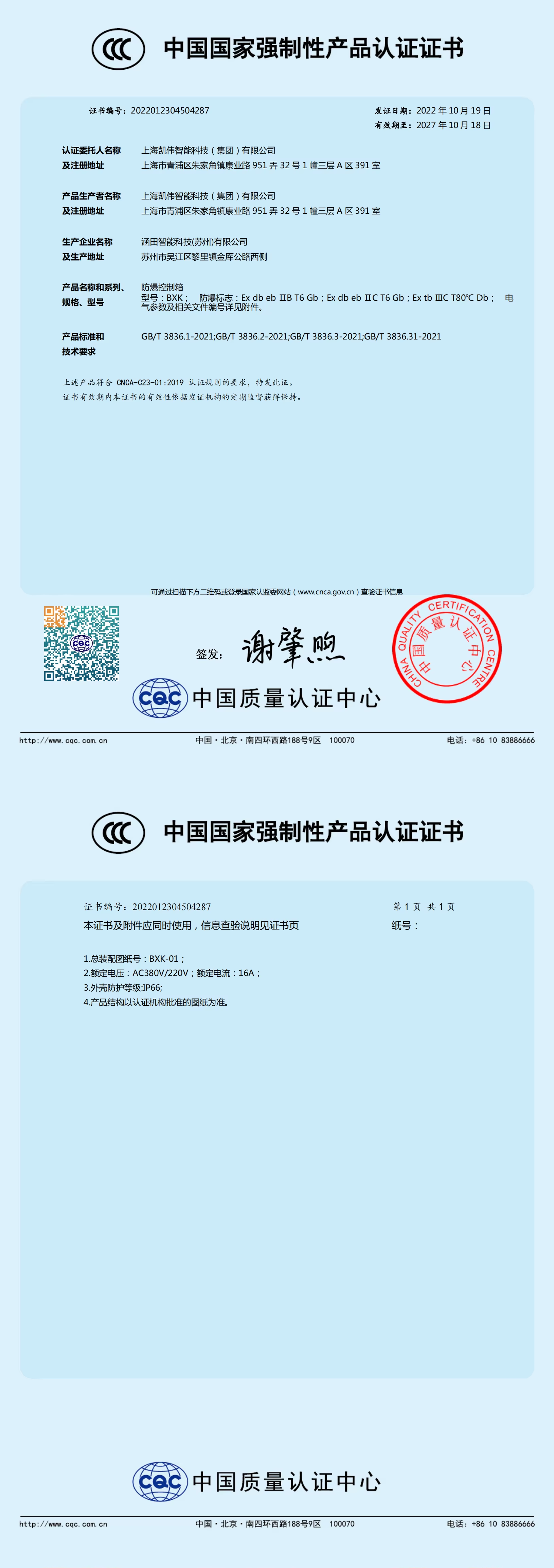
Figure 5 — CCC certificate 2022012304504287 for explosion-proof enclosure model BXK-D1, part of the compliance stack behind explosion-proof sealing projects.
FAQ: Evaluating a PU Gasket Dispensing Machine for These Five Applications
1. Which certifications should I check before using a PU gasket dispensing machine for explosion-proof electrical parts?
There are three layers. First, the dispensing machine itself: the CE certificate MD-TCF-240307-55472, issued by GTS under the 2006/42/EC Machinery Directive, covers automatic gluing equipment, and the ISO 9001:2015 certificate (GB/T 19001-2016/ISO 9001:2015, issued by NSY Certification (Shanghai) Co., Ltd.) covers the sales scope of automatic foam gasket machines and control boxes. Second, the adhesive: UL94 classification for the foaming adhesive under certificate THSH25033168768EN (GTS, UL 94-2023 Rev.2-2024 Section 8), RoHS for sealing foam glue-B under UNIB21090613HC-01, and a Non-Hazardous Certificate NO.202600234403353 from SICIT under the UN Dangerous Goods Transport Regulations (Maritime). Third, the enclosure programme where it applies: ATEX certificate ECM 25 ATEX-B D001 for the explosion-proof enclosure (cabinet) and CCC certificate 2022012304504287 for enclosure model BXK-D1.
2. Can one PU gasket dispensing machine cover several of these five applications?
Partly. The platform handles two-component or three-component polyurethane with a 1–10:1 mixing ratio and seal strip widths from 2 mm to 60 mm across the model range, which covers most enclosure, luminaire, appliance, and automotive cover channels. What changes between applications is the configuration: 3-axis linear robot arm versus the 6-axis KW-526 platform, mixing head model (KW800 or KW-900), touch-screen size, and automation options such as automatic A/B material feeding, elliptical chain worktable, automatic switching workbench, safety grating, and constant-temperature water circulation. KAIWEI provides OEM and ODM production services, and the documented customization scope covers color and material, mechanical arm, plasma, logo design, appearance design, three-component configuration, and 12-language support.
3. What determines the configuration scope of a project?
Four variables decide how much machine a project needs: the number of components (two or three), the gasket geometry and required bead width, the axis configuration (3-axis versus 6-axis), and the automation level, including workbench type and feeding method. Tooling and fixturing for the specific part geometry sit on top of that. Because the minimum order quantity for these machines is one unit, a buyer can evaluate a single machine configuration before committing to a multi-unit line, and payment terms are structured at 30/70 with delivery available on FOB or CIF terms.
4. Can a buyer validate sealing performance before committing to a high-volume schedule?
Yes, in two ways. The minimum order quantity for KAIWEI PU gasket dispensing machines is 1 unit, so a single-machine evaluation on real production parts is possible before scaling. In addition, the documented acceptance procedure includes full inspection before shipment, and third-party testing can be provided as part of that acceptance process. The automotive reference described above shows what validation looks like at scale: 20 units in continuous operation over two years in a US paint shop, with IP66 waterproof and dust-proof sealing results recorded.
5. What lead time and production capacity should a buyer plan for?
The documented lead time is 7 days, with monthly production capacity of 2,000 sets and 100% testing as the quality control standard. After-sales support is provided remotely, which is the normal model for equipment that is commissioned on the buyer's own line. Buyers preparing a 2026 sealing project can review the full machine configuration range and compliance documentation in the KAIWEI product brochure before requesting a quotation — see the download link in the section below.
Conclusion: Match the Application First, Then the Machine
The five applications ranked here — electrical distribution and industrial control, explosion-proof electrical, lighting and LED, automotive parts, and home appliances — share one property: their sealing requirement is functional, not decorative. That is what makes them the highest-volume applications for PU gasket dispensing machines, and it is also why the evaluation sequence in this article starts with the sealing requirement and the gasket geometry rather than with machine specifications.
For buyers in the Evaluation and Execution stages of a 2026 project, the practical takeaways are straightforward. Define whether the part needs ingress protection, flame resistance, or consumer-market material compliance, because that decision determines both the adhesive grade and the certification set. Match the sealing channel to a seal strip width range before discussing speed. Then decide the axis configuration and automation level based on the actual part geometry and the manual handling you want to remove from the line.
KAIWEI manufactures PU gasket dispensing machines, PU foaming equipment, and intelligent sealing systems from its facility in Shanghai, with CE and ISO 9001 certified processes and export coverage across more than 60 countries. More detail on the machine range and its applications is available at www.sh-kaiwei.com.
Next Step: Review the Machine Range and Request a Configuration Proposal
Download the KAIWEI product brochure to compare the KW-510B, KW-520A, 520A-PC, KW-520B, KW-523, KW-523A, and KW-526 configurations against your application: Download the KAIWEI PU Gasket Dispensing Machine brochure (PDF).
To discuss a specific sealing application, request a quotation, or arrange a single-unit evaluation, contact the KAIWEI team:
Email: info@kaiwei-sh.com
Tel / WhatsApp: 13761986986
Address: No.6433 East Yinggang Road, Qingpu District, Shanghai, China
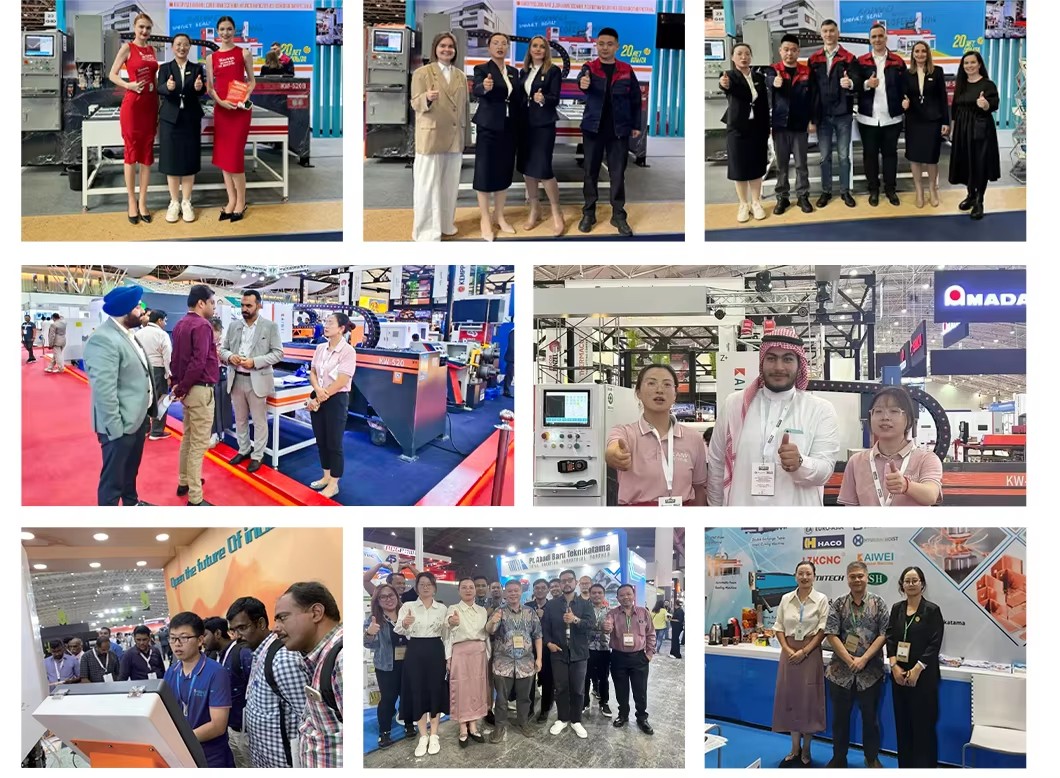
Figure 6 — KAIWEI supports sealing projects from configuration through commissioning and remote after-sales support.
Editorial note: application rankings in this article reflect how frequently each sealing requirement appears in automatic gasket dispensing projects, and the documented application range of the equipment discussed. Market values and certification details are cited from the sources named in the text.
Have Questions or Need More Details?
Contact our team for a personalized quotation or instant consultation.
Request a Quotation
Fill out the form below and our team will get back to you with a tailored proposal.
WhatsApp Direct Chat
Prefer to chat in real-time? Message us on WhatsApp for instant assistance & quick answers.
- Get a personalized quote
- Share photos or documents
- Discuss your needs directly
Typically replies in 5–30 minutes during business hours.