PLC-Integrated or Standalone PU Gasket Dispensing Machine: A Head-to-Head Decision
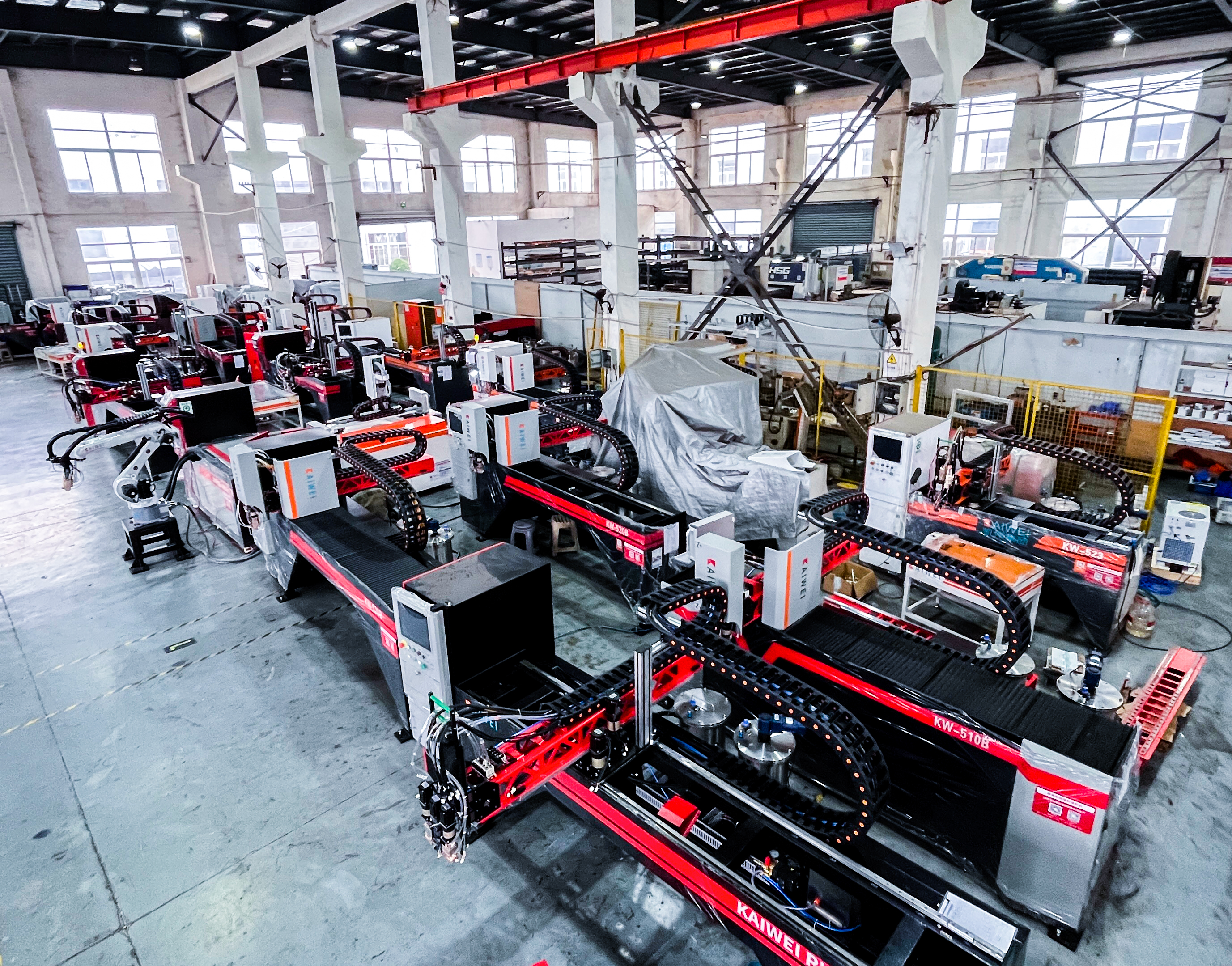
KAIWEI production site, where PU gasket dispensing machines are assembled and tested before shipment. Image: company content unit (factory).
Choosing between a PLC-integrated dispensing system and a standalone PU gasket dispensing machine is a production-line decision, not a machine-specification decision. Both configurations meter two-component polyurethane at a controlled ratio, mix it in a mixing head, and deposit a formed-in-place foam gasket that cures into the seal. The difference is where that process lives: as a self-contained island, or as a synchronized subsystem inside an automatic gluing production line.
The evaluation stage is where this choice is normally made, and also where it is most often made badly. Buyers who compare the two configurations on dispensing accuracy alone tend to under-budget integration, while buyers who assume that line integration always pays back tend to specify automation they cannot keep fed. This comparison separates the technical differences from the commercial ones using KAIWEI's published PU gasket dispensing machine data, and closes with the decision rules that distinguish a good fit from an expensive mistake.
Quick answer: Specify PLC-integrated dispensing when one or two part families run at high volume inside an existing or planned automatic gluing production line and continuous operation is a hard requirement. Specify a standalone unit when a single machine must serve several part families, when line re-engineering is not justified, or when automation is being staged in phases. Mixing head, metering ratio, and seal strip geometry are the same in both cases; what changes is control ownership, part handling, and the uptime plan.
Problem Definition: What Actually Differs Between the Two Configurations
A standalone PU gasket dispensing machine carries its own material tanks, metering pumps, mixing head, motion frame, and controller on a single base. An operator or a local loader presents the part, the machine dispenses the gasket path, and the finished part is removed. The unit can be installed, commissioned, relocated, and maintained without touching the rest of the plant, and its output is limited mainly by the handling around it.
A PLC-integrated system uses the same dispensing hardware, positioned inside an automatic gluing production line. KAIWEI's product data notes that the PU gasket dispensing machine requires supporting equipment such as an Automatic Gluing Production Line when it is deployed in this way. The machine's controller - a motion control card, or a teach pendant combined with a PLC - is coordinated with the line's conveying and indexing sequence so that positioning, dispensing, and part transfer execute as one cycle rather than three independent steps.
The practical consequence is short to state. A standalone unit's performance ceiling is usually the operator and the part handling around the machine; a line-integrated system's ceiling is usually the stability of the interface between the dispenser and the line.
Throughput and Takt
Takt is set by the longest element in the cycle, and in foam gasket production the dispensing path is rarely the longest element. Seal strip width options run from 4-30 mm on the KW-520A, KW-520B, KW-510B and 520A-PC; 2-10 mm or 10-60 mm on the KW-523 and KW-523A; and 2-60 mm on the KW-526. Path length and section can therefore be matched to the part instead of the part being matched to the machine. What changes in a line-integrated configuration is part presentation: an automatic switching workbench, an elliptical chain worktable, and automatic feeding of A and B material take manual load and unload out of the cycle, letting the dispenser run closer to its own repeatable cycle. Those options also exist on a standalone unit as customizations, but the operator stays inside the cycle unless handling is purchased with the machine.
Integration Complexity
Integration complexity is defined by the interface, not by the dispenser. KAIWEI lists three interface modes across the PU gasket dispensing machine range - an integrated operation box, a cantilever control box, and teach pendant control - on top of a controller set that includes motion control card and teach pendant + PLC options. Each mode changes what the line has to provide: signal exchange for cycle start and part-present, recipe selection when the line runs several part numbers, and safety interlocks that satisfy the guarding philosophy of the whole line. Safety grating is available as a machine-side customization, which reduces how much line-side guarding a project must design from scratch.
Two further integration factors are easy to underestimate. Footprint: linear models are listed at 2000 x 1000 x 800 mm, while the 6-axis KW-526 is built to a customized dimension, so the layout budget differs between a fixed gantry cell and a robotic cell. Operator language: KAIWEI states support for 12 languages, which matters when a line is commissioned in one country and operated in another.
Continuous Operation and Uptime
Continuous operation requirements push the specification toward material supply, thermal stability, and maintenance access rather than toward dispensing speed. KAIWEI machines use air pressure tanks with A and B volumes of 40 L each, manual or automatic filling with an optional filling station, and manual or automatic air charging; the A tank is agitated and the B tank is not. Temperature control is available as optional water temperature control, and cleaning uses high-pressure water. Together these determine how long a machine can run between operator interventions and how quickly it returns to production after a material or color change.
The operating environment is specified from -20 to 40 degrees Celsius. That range covers panel shops, purification-adjacent assembly areas, and unheated warehouses, but it also means a line running in a temperature-controlled hall and a line running beside a paint shop need the same discipline around material conditioning and dispense repeatability rather than a different class of machine.
Industry Background: Why This Decision Is Asked More Often
The PU gasket dispensing machine segment is small relative to the machinery around it and is growing with the same demand that drives enclosure, filter, lighting, and automotive sealing automation. KAIWEI industry analysis places the global market for PU gasket dispensing machines at approximately USD 1.2 billion in 2025. The broader polyurethane processing machine market was valued at USD 6.627 billion in 2024 and is projected to grow at a CAGR of 10.21% through 2035, according to Market Research Future. The form-in-place liquid gasket segment reached USD 270 million in 2023, with increasing adoption reported in EV battery enclosures (Maximize Market Research).
Regional concentration explains why integration projects cluster in specific supply chains. Asia-Pacific held a 42.2% share of the polyurethane processing machine market, driven by industrial manufacturing growth in China (Grand View Research). The same source reported that high-pressure PU processing units accounted for 68% of the global machine type share. Published forecasts for the wider PU machinery market and for the narrower gasket dispensing segment differ substantially because they measure different scopes; any single market figure should be read as a scope statement rather than a precise addressable market.
The supplier landscape for FIPFG and PU dispensing equipment commonly includes Sonderhoff (Henkel), RAMPF Group, and Cera-Tec, alongside manufacturers such as KAIWEI, which was founded in 2004 in Shanghai, holds more than 100 national patents, and exports to more than 60 countries. The equipment is applied to electrical control panels, distribution boards, enclosures and explosion-proof boxes, air filters, purification room doors, refrigeration doors, transformer covers, street and stadium lighting, cable connectors, appliance parts, and automotive mountings and battery covers.
Dust-proof and explosion-proof sealing for enclosures in Electrical Control Panels and other sectors is the application where the standalone-versus-integrated question is raised most often, because the same enclosure program may start as manual or semi-automatic production and later move to a fully automated gluing line.
Detailed Solution: How KAIWEI's Platform Serves Both Configurations
KAIWEI builds the PU gasket dispensing machine on a shared platform, so the same core hardware can be specified as a standalone cell or as a line-integrated station, with the controller and interface selected accordingly. That single-platform approach is what makes a genuine head-to-head comparison possible, because the buyer is comparing deployment choices rather than comparing two unrelated machines.
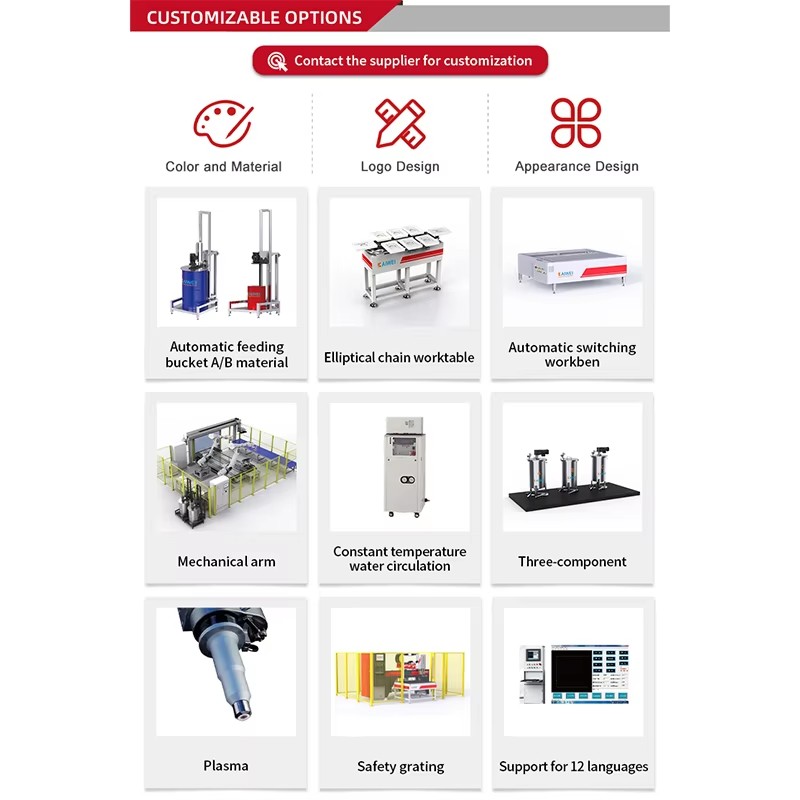
Machine configuration: material tanks, metering pumps, mixing head, robot frame, and control interface. Image: capability content unit (configuration).
Control Architecture: Motion Control Card, Teach Pendant, and PLC
Every model in the listed range offers a controller choice of Motion Control Card or Teach Pendant + PLC, operated from a PC or a teach pendant, with a touch-screen HMI in 10.2-inch, 12.1-inch, or 15-inch size depending on model. Interface mode is selectable: integrated operation box on the KW-520A, KW-520B, KW-523, KW-523A, and KW-526; cantilever control box on the KW-510B; teach pendant control on the 520A-PC. For line integration, the teach pendant + PLC path is the option that allows a line controller to own the sequence while the machine retains responsibility for mixing ratio, dispensing path, and seal geometry.
Frames, Reach, and Seal Geometry
Five of the listed models use a 3-axis linear robot arm: KW-520A, KW-520B, KW-510B, KW-523, and KW-523A. Effective stroke is 1250 x 800 x 200 mm on the KW-523 and KW-523A, and 2250 x 1250 x 200 mm on the KW-520A, KW-520B, and KW-510B. The KW-526 uses a 6-axis linear robot arm with customized stroke and customized machine dimensions, which is the configuration to examine when the gasket path is three-dimensional or the part envelope is outside a fixed gantry cell.
Metering, Mixing, and Material Handling
Mixing ratio is adjustable from 1-10:1. Metering pumps are listed as KAIWEI or Barmag with A and B pump specifications of 3 cc/r and 0.6 cc/r. Mixing heads are the KW800 or KW-900, matched to the required seal strip width. Raw material is polyurethane, with silicone also listed for the KW-523 and KW-523A, and component selection is two-component or three-component. Frame and workbench materials are carbon steel, stainless steel 304, or aluminum alloy, with a square tube welded workbench. Air pressure requirement is at least 6 bar with an oil-water separator, and the water supply is tap water.
What Buyers Can Customize
KAIWEI operates an OEM/ODM model. Documented customization options include color and material, automatic feeding of bucket A and B material, mechanical arm, plasma, logo design, elliptical chain worktable, constant temperature water circulation, safety grating, appearance design, automatic switching workbench, three-component capability, and support for 12 languages. Commercial terms listed in the same capability data are a 1-set minimum order quantity, a 7-day lead time, 100% testing before shipment, and remote after-sales support.
Head-to-Head Comparison: Standalone Unit vs. PLC-Integrated Dispensing
The comparison below is limited to documented platform facts and to decision logic that follows from them. No throughput guarantees are implied for either configuration, because cycle time depends on the gasket path, the section, the metering system, and the handling around the machine.
| Decision dimension | Standalone PU gasket dispensing machine | PLC-integrated dispensing in an automatic gluing line |
|---|---|---|
| Control ownership | Motion Control Card or Teach Pendant + PLC inside the machine; operation from PC or teach pendant | Same controller family, coordinated with the line sequence for cycle start, part-present, and recipe selection |
| Interface mode | Integrated operation box, cantilever control box, or teach pendant control, selectable by model | The same interface options, positioned according to the line's operating position |
| Part presentation | Operator or local loader presents and removes parts at the workbench | Line conveying presents parts; the machine requires supporting equipment such as an Automatic Gluing Production Line |
| Automation options | Automatic feeding of A/B material, elliptical chain worktable, automatic switching workbench, safety grating, plasma | The same options, specified to match the line's handling and guarding concept |
| Seal geometry | 2-10 mm, 10-60 mm, 4-30 mm, or 2-60 mm depending on model and mixing head | Unchanged by integration; geometry is set by mixing head and programme |
| Reach and footprint | 3-axis arm with 1250 x 800 x 200 mm or 2250 x 1250 x 200 mm stroke; 2000 x 1000 x 800 mm typical footprint | 6-axis KW-526 with customized stroke and customized dimensions where the part envelope demands it |
| Environment | -20 to 40 degrees Celsius operating range | Same machine-side range; line-side ambient conditions still affect material behaviour |
| Uptime dependencies | 40 L A tank and 40 L B tank, manual or automatic filling, optional filling station, optional water temperature control, high-pressure water cleaning | The same machine-side requirements, plus line-side stoppage sources such as conveying and upstream feeding |
| Typical best fit | High-mix, medium-volume enclosure or filter production; multi-part-family shops; staged automation | One or two part families at high volume; continuous operation targets; dedicated dust-proof and explosion-proof enclosure programmes |
Sources: KAIWEI PU gasket dispensing machine product data, capability data, and the assigned product deployment facts.
Model-Level Specification Reference
Buyers comparing a standalone cell with a line-integrated station should compare the model that would actually be installed in each case, because the models differ in frame type, reach, and head.
| Model | Frame | Mixing head | Seal strip width | Effective stroke | Screen |
|---|---|---|---|---|---|
| 520A-PC | 3-axis linear robot arm | KW800 | 4-30 mm | 2250 x 1250 x 200 mm | 10.2 in |
| KW-520A | 3-axis linear robot arm | KW800 | 4-30 mm | 2250 x 1250 x 200 mm | 10.2 in |
| KW-520B | 3-axis linear robot arm | KW-900 | 4-30 mm | 2250 x 1250 x 200 mm | 15 in |
| KW-510B | 3-axis linear robot arm | KW-900 | 4-30 mm | 2250 x 1250 x 200 mm | 12.1 in |
| KW-523 | 3-axis linear robot arm | KW800 / KW-900 | 2-10 mm / 10-60 mm | 1250 x 800 x 200 mm | 15 in |
| KW-523A | 3-axis linear robot arm | KW800 / KW-900 | 2-10 mm / 10-60 mm | 1250 x 800 x 200 mm | 15 in |
| KW-526 | 6-axis linear robot arm | KW800 / KW-900 | 2-60 mm | Customized | 15 in |
Shared platform values across the listed models: raw material polyurethane (silicone also listed for KW-523 and KW-523A); two-component or three-component selection; HMI touch screen; operation from PC or teach pendant; controller Motion Control Card, or Teach Pendant + PLC; mixing ratio 1-10:1; metering pumps KAIWEI or Barmag at A 3 cc/r and B 0.6 cc/r; air pressure tanks A 40 L and B 40 L with agitation in tank A only; manual or automatic filling and air charging; high-pressure water cleaning; optional water temperature control; power supply 220 V or 380 V at 4 kW or 5.5 kW; air pressure at least 6 bar; frame materials carbon steel, stainless steel 304, or aluminum alloy. Machine dimensions are 2000 x 1000 x 800 mm on the linear models and customized on the KW-526.
Step-by-Step Breakdown: Six Decisions Before You Choose
The following sequence converts the comparison into a procurement decision. Each step produces an output that feeds the next, so a project cannot skip the early steps and still specify the right configuration.
Step 1 - Fix the part family mix and the takt. Count distinct part numbers and the gasket perimeter range. A programme with one or two families and a stable takt points toward line integration; a programme running many families in batches points toward a standalone unit, because changeover frequency becomes the dominant cost.
Step 2 - Decide who owns the recipe. If the line controller must select parameters per part number automatically, the teach pendant + PLC controller path is the relevant option. If operators set parameters at the machine, an integrated operation box or cantilever control box is sufficient. This single decision determines most of the integration engineering.
Step 3 - Match frame and reach to the envelope. Confirm the gasket path plane and part size against 3-axis stroke options of 1250 x 800 x 200 mm or 2250 x 1250 x 200 mm, and move to the 6-axis KW-526 with customized stroke when the path is three-dimensional.
Step 4 - Lock seal geometry and chemistry. Choose the mixing head (KW800 or KW-900) and verify the required strip width against the 2-10 mm, 10-60 mm, 4-30 mm, or 2-60 mm ranges, then confirm whether two-component or three-component metering is needed and whether silicone must also be supported.
Step 5 - Design the uptime plan. Size the material supply around the 40 L A and B tanks, decide between manual and automatic filling or air charging, specify the optional filling station if unattended running is required, and add optional water temperature control where ambient conditions vary. Include the high-pressure water cleaning routine in the maintenance schedule and confirm the -20 to 40 degrees Celsius operating window against the actual shop floor.
Step 6 - Verify compliance for the market and the enclosure type. KAIWEI holds a CE certificate for automatic gluing equipment (certificate MD-TCF-240307-55472, issued by GTS under the 2006/42/EC Machinery Directive, valid 2024-04-02 to 2029-04-01), an ISO 9001:2015 certificate covering sales of automatic foam gasket machines and explosion-proof control boxes (valid 2024-05-23 to 2027-05-22), an ATEX certificate for an explosion-proof enclosure or cabinet (ECM 25 ATEX-B D001, valid 2025-04-10 to 2030-04-09), a VOC CE certificate for Electric Enclosure referencing EN 60529:1991+A2:2013 and EN 62208:2011 (ICR/VC/HS230352, valid 2023-03-28 to 2028-03-27), a UL 94 test report on foaming adhesive (THSH25033168768EN, UL 94-2023 Rev.2-2024 Section 8), a RoHS certificate for sealing foam glue-B (UNIB21090613HC-01), and a Non-Hazardous Certificate for polyurethane sealing foam glue-A (NO.202600234403353, valid 2026-01-01 to 2026-12-31). Match the certificate set to the destination market and to whether the enclosure program is explosion-proof or standard.
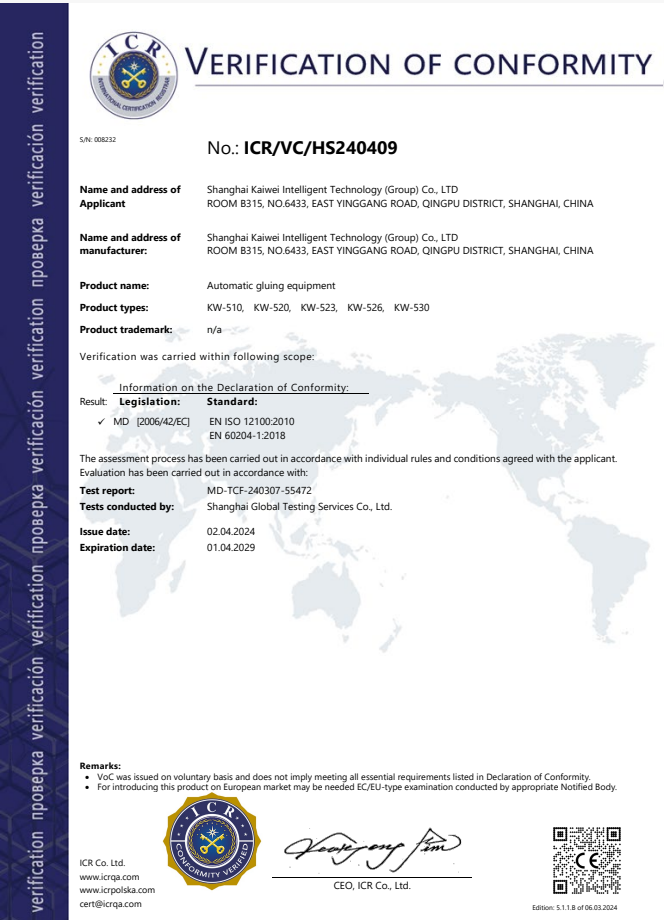
CE certification for automatic gluing equipment. Image: certification content unit.
Use Cases: Where Each Configuration Fits
Electrical control panels and enclosures. Dust-proof and explosion-proof sealing for enclosures in Electrical Control Panels and other sectors is the highest-volume application for both configurations. Panel builders producing a fixed range of enclosure sizes on a continuous schedule gain most from line integration; panel builders producing customized enclosures in small batches usually gain more from a standalone unit running on a 3-axis frame with 2250 x 1250 x 200 mm stroke.
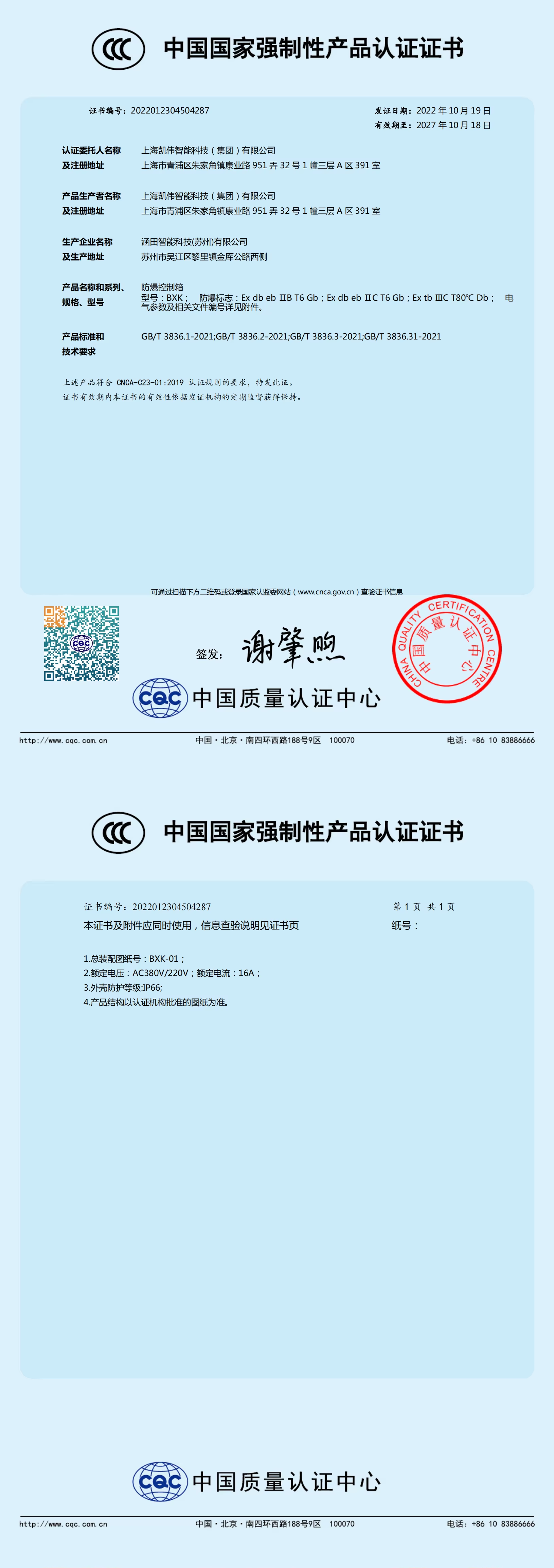
China Compulsory Certificate for an explosion-proof enclosure (Model BXK-D1). Image: certification content unit (CCC).
Automotive and paint shop environments. A documented KAIWEI success case is located in the United States with an automotive OEM client using 20 units in a paint shop over a two-year period, reporting stable operation, IP66 waterproof and dust-proof sealing, high production efficiency, high-precision dispensing, automatic production, and customized gasket shape. That profile - automotive volumes, continuous shifts, and demanding ambient conditions - is the case where line integration is normally specified from the start.
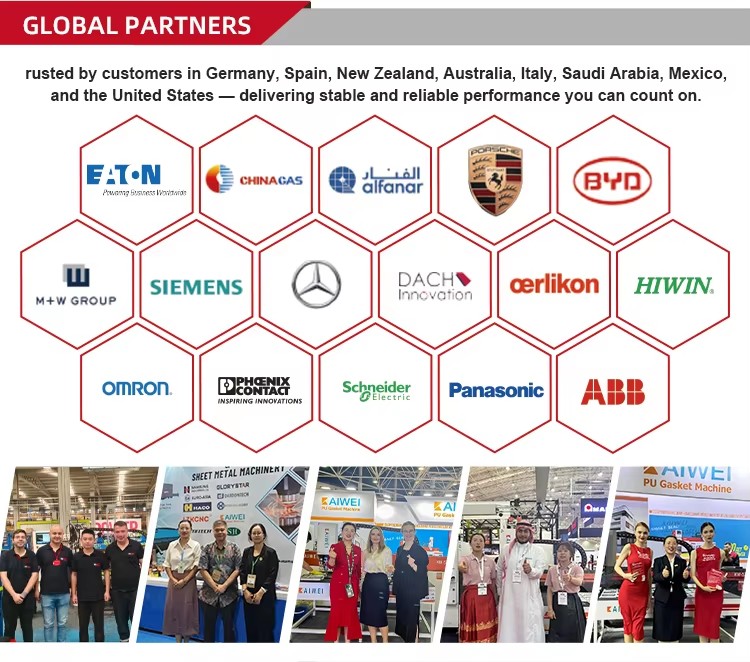
Automotive OEM partner case, United States. Image: case content unit (partner).
Filters, lighting, and appliance components. Air filters, purification room doors, refrigerator doors, transformer covers, street and stadium lighting, LED luminaires, cable connectors, waterproof cabinets, and appliance parts all use the same dispensing platform at different scales. Where several of these product lines share one machine, a standalone unit is the practical choice; where one product line dominates the volume, integration into an automatic gluing production line is the defensible choice.
Explosion-proof and IP-rated enclosure programmes. These programmes typically require the sealing result plus the documentation trail. The relevant machine-side evidence set is the CE certificate for automatic gluing equipment, the VOC CE certificate referencing EN 60529 and EN 62208 for electric enclosures, the ATEX certificate for explosion-proof enclosures, the UL 94 report on the foaming adhesive, RoHS compliance for the sealing glue, and the Non-Hazardous Certificate for the polyurethane sealing foam glue.
FAQ
Does a KAIWEI PU gasket dispensing machine carry the certifications needed for EU and explosion-proof enclosure work?
Yes. KAIWEI holds a CE certificate for automatic gluing equipment (MD-TCF-240307-55472, issued by GTS under the 2006/42/EC Machinery Directive, valid 2024-04-02 to 2029-04-01) and an ISO 9001:2015 certificate covering sales of automatic foam gasket machines, explosion-proof control boxes, control boxes including explosion-proof, and junction boxes (valid 2024-05-23 to 2027-05-22). An ATEX certificate (ECM 25 ATEX-B D001, valid 2025-04-10 to 2030-04-09) covers an explosion-proof enclosure or cabinet, and a VOC CE certificate (ICR/VC/HS230352, valid 2023-03-28 to 2028-03-27) covers Electric Enclosure against EN 60529:1991+A2:2013 and EN 62208:2011. Material-level evidence includes a UL 94 test report on foaming adhesive (THSH25033168768EN, UL 94-2023 Rev.2-2024 Section 8), RoHS compliance for sealing foam glue-B (UNIB21090613HC-01), and a Non-Hazardous Certificate for polyurethane sealing foam glue-A (NO.202600234403353, valid 2026-01-01 to 2026-12-31).
Can a PU gasket dispensing machine be integrated into an existing automatic gluing production line?
Yes, provided the line supplies the supporting equipment. KAIWEI's product data states that the PU gasket dispensing machine requires supporting equipment such as an Automatic Gluing Production Line when deployed this way. The controller options are Motion Control Card or Teach Pendant + PLC, and the interface can be an integrated operation box, a cantilever control box, or teach pendant control depending on model. Documented customization options that support integration include automatic switching workbench, elliptical chain worktable, automatic feeding of bucket A and B material, safety grating, constant temperature water circulation, three-component metering, and support for 12 languages. Machines built for this role are specified to operate from -20 to 40 degrees Celsius and to deliver dust-proof and explosion-proof sealing for enclosures used in Electrical Control Panels and other sectors.
What drives the cost difference between a standalone machine and a PLC-integrated system?
Machine-side cost drivers are two-component versus three-component metering, mixing head selection (KW800 or KW-900), seal strip width range, 3-axis versus 6-axis frame, effective stroke, automatic versus manual filling and air charging, the optional filling station, optional water temperature control, safety grating, and the choice of carbon steel, stainless steel 304, or aluminum alloy construction. Line-side cost drivers are conveying, part-present sensing, signal exchange with the machine controller, and line guarding. Because the integration scope sits outside the machine, the honest comparison is total installed cost per good part, not machine price alone. KAIWEI lists a 1-set minimum order quantity for its PU gasket dispensing machines.
Can we validate the machine on our own parts before committing to a full line?
Yes. KAIWEI operates with a 1-set minimum order quantity, a 7-day lead time, and 100% testing before shipment, which allows a single unit to be validated on real parts before a line-integrated configuration is ordered. A documented success case is located in the United States, where an automotive OEM client runs 20 units in a paint shop with two years of stable operation, IP66 waterproof and dust-proof sealing, high production efficiency, high-precision dispensing, automatic production, and customized gasket shape.
What lead time and supply capacity should a buyer plan around?
KAIWEI lists a 7-day lead time and a 1-set minimum order quantity, with remote after-sales support. The company was founded in 2004, operates from Shanghai with a 20,000+ square meter facility and more than 100 employees, reports an annual output of 2,000 units, a 70% export ratio, and exports to more than 60 countries, with a technical team of more than 30 engineers and more than 100 national patents. Buyers planning a line-integrated programme can start with a single machine, validate sealing performance and cycle behaviour on production parts, then scale. To arrange a sample evaluation or request a configuration quotation, contact KAIWEI at info@kaiwei-sh.com or download the product brochure.
Conclusion: The Decision Rule
The head-to-head result is not a winner but a rule. Choose PLC-integrated dispensing when one or two part families run at high volume, when the sealing cycle must be synchronized with conveying and part-present signals, and when continuous operation is a production requirement. Choose a standalone unit when one machine must serve several part families, when the plant cannot absorb line downtime, or when automation is being staged so that payback is proven before the line is rebuilt.
Both paths use the same KAIWEI platform: the same 1-10:1 mixing ratio, the same KW800 or KW-900 mixing heads, the same metering pumps and 40 L air pressure tanks, and the same seal strip width ranges of 2-60 mm on the KW-526 or 4-30 mm on the KW-520A, KW-520B, KW-510B, and 520A-PC. What a buyer is really selecting is control ownership, part handling, and an uptime strategy that matches how the factory actually runs.
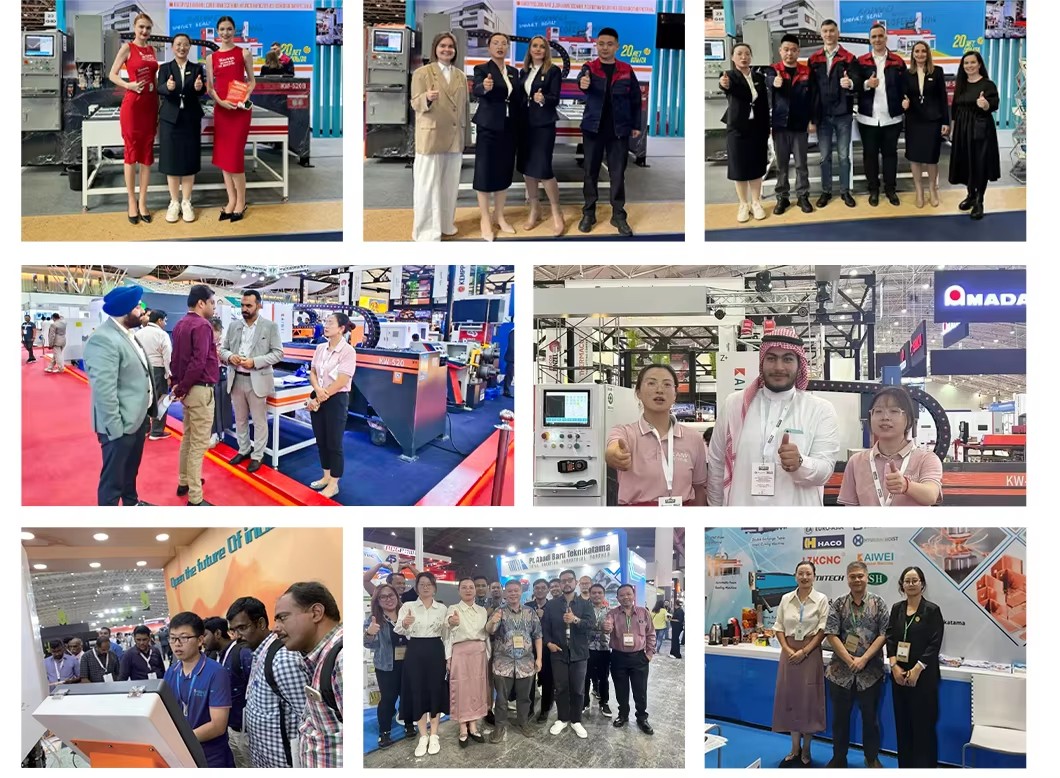
KAIWEI meeting buyers at industry events. Image: case content unit (exhibition).
Next step: evaluate on your own parts
Send part drawings and the gasket perimeter, section, and material requirement to KAIWEI for a configuration recommendation covering frame, mixing head, interface mode, and compliance documentation. A single-unit configuration can be ordered at a 1-set MOQ and validated before a line-integrated project is committed.
Email: info@kaiwei-sh.com | Tel / WhatsApp: 13761986986
Website: www.sh-kaiwei.com
Address: No.6433 East Yinggang Road, Qingpu District, Shanghai, China
Have Questions or Need More Details?
Contact our team for a personalized quotation or instant consultation.
Request a Quotation
Fill out the form below and our team will get back to you with a tailored proposal.
WhatsApp Direct Chat
Prefer to chat in real-time? Message us on WhatsApp for instant assistance & quick answers.
- Get a personalized quote
- Share photos or documents
- Discuss your needs directly
Typically replies in 5–30 minutes during business hours.