PU Gasket Dispensing Machine Application Guide: Matching KW-510B to Your Sealing Project
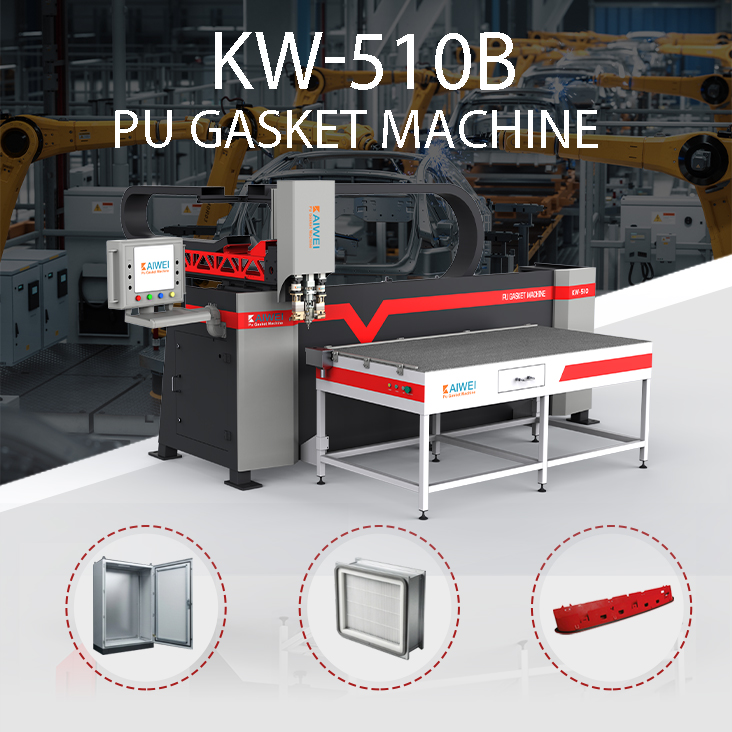
The KAIWEI KW-510B is a three-axis PU gasket dispensing machine built for formed-in-place polyurethane gaskets on flat and gently contoured parts up to 2250 × 1250 mm, with a 200 mm Z stroke and a 4–30 mm seal-strip range. A sealing project fits this model when four conditions line up: the part sits inside that working envelope, the gasket section falls between 4 and 30 mm, the material is a two- or three-component polyurethane running at a 1–10:1 mixing ratio, and the cell can supply 220 V or 380 V power, at least 6 bar of air and a water supply for high-pressure cleaning. Where one of those conditions fails, the project normally needs a different configuration rather than a different argument.
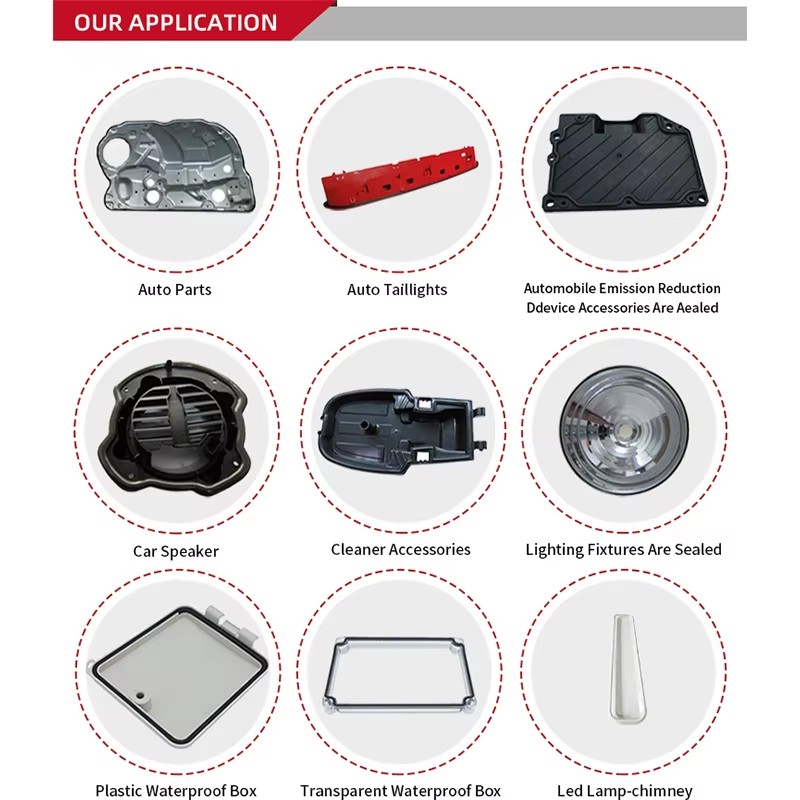
This guide is written for the person who has to make that judgement before a purchase order exists — a process engineer, a sealing-line planner, or a procurement lead comparing quotations. It works through the KW-510B specification against six project types that recur in KAIWEI's application records: electrical control panels, air filters and filtration equipment, home appliances, lighting, auto parts, and lock and enclosure hardware. It also marks the point at which the machine stops being the right answer, and separates what a dispensing machine can certify from what only the finished enclosure can.
Why a Capable Machine Can Still Be the Wrong Machine
PU gasket dispensing equipment is frequently bought against one number — the largest panel the plant expects to run — and then underperforms on something smaller: a gasket that finishes at 3 mm instead of 5 mm, a part with a 250 mm return flange, a material system whose ratio sits outside the pump set, or a cell without stable 6 bar air. Matching a machine to a sealing project is a four-part check, and every part has to pass on its own.
- Geometry. The footprint, diagonal and height of the part plus its fixture must fit the effective stroke, including the approach path the nozzle needs at the start and end of each bead.
- Gasket section. The bead width has to sit inside the mixing head's range, and the gasket height has to match the compression your enclosure design expects.
- Material system. Component count, mixing ratio, tank volume, agitation and temperature control all follow from the chemistry, not from the machine brochure.
- Plant services and duty cycle. Power, air quality, water, floor space and the number of hours per week the station actually runs decide whether a specification survives contact with production.
Compliance is the fifth check, and it is the one most often assigned to the wrong party. KAIWEI's application records for these industries list the function as dust-proof and explosion-proof sealing for enclosures, and the special requirement as explosion-proof and IP66 waterproof. Both describe the finished enclosure. A dispensing machine places a polyurethane bead; whether an assembled cabinet reaches IP66, or satisfies an explosion-proof classification, depends on gasket geometry, compression, mating-surface flatness, closure hardware and the test method used to verify the result. A supplier who answers an IP66 question with a machine datasheet has answered a different question.
Where This Project Pattern Comes From
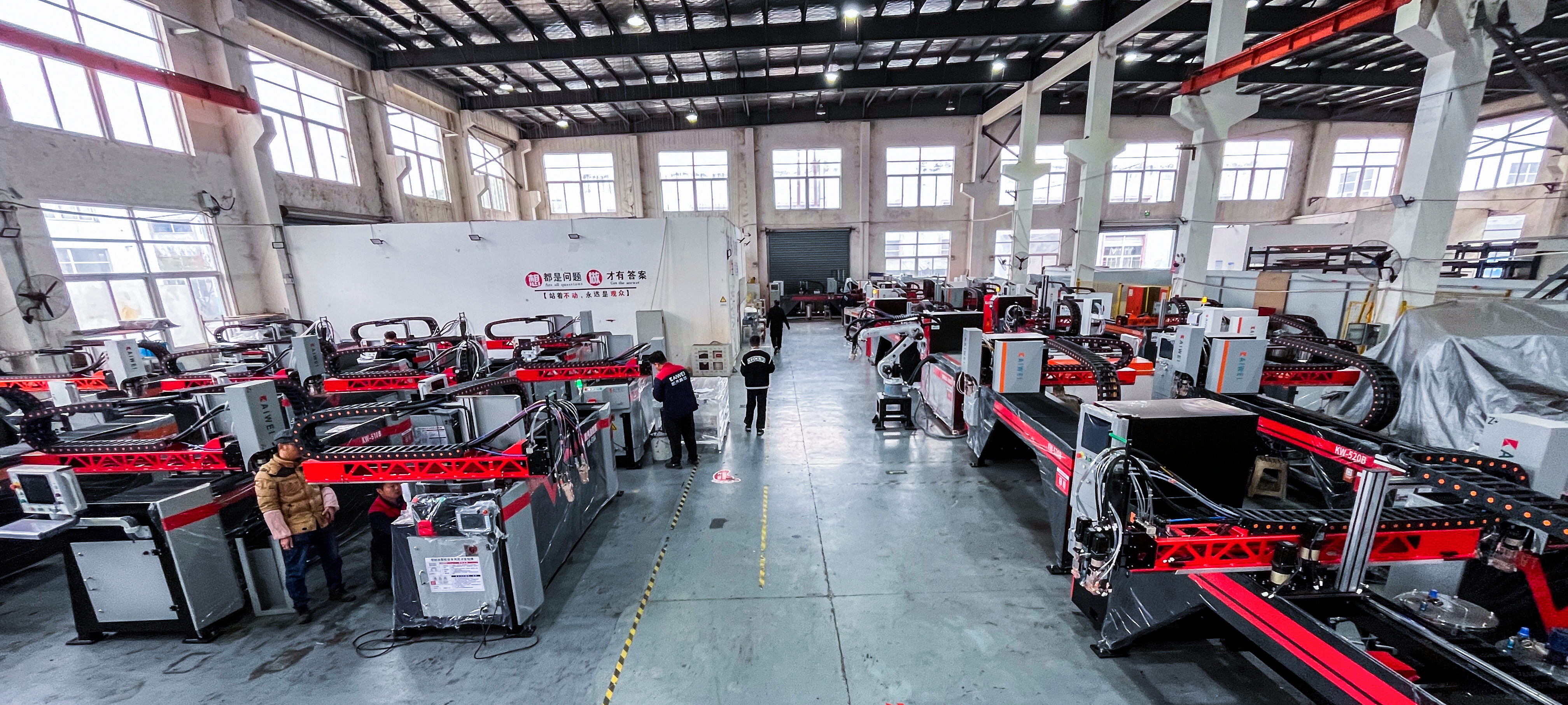
Shanghai Kaiwei Intelligent Technology (Group) Co., Ltd. (KAIWEI) has built industrial sealing, foaming and dispensing systems since 2004 from a production site of more than 20,000 m² in Shanghai, and states that it exports to more than 60 countries, with Germany, the United States and Southeast Asia named among its markets. The company reports CE and ISO9001 certification and a technical team of more than 30 engineers.
What makes the KW-510B question recur is the shape of the demand, not the size of the company. KAIWEI's application records for electrical distribution and industrial control, explosion-proof electrical equipment, lighting and LED, home appliances, auto parts, filtration equipment, and lock and hardware accessories carry an almost identical project profile: automatic sealing, dust-proof and explosion-proof sealing for enclosures, 24/7 continuous operation on an automatic production line, an automatic gluing line as the matched equipment, and a working condition of −20 to 40 °C. Buyers in these segments are therefore not shopping for a bench machine. They are specifying a station that has to behave predictably inside a line, inside a plant, inside a market that applies its own conformity rules.
The KW-510B Envelope in Numbers
A small subset of the datasheet decides fit. The table below collects the KW-510B values a project engineer will actually use, taken from KAIWEI's published specification for the model.
| Parameter | KW-510B documented value |
|---|---|
| Working envelope | 2250 × 1250 × 200 mm effective stroke, 3-axis linear robot arm |
| Seal strip width | 4–30 mm, via KW-900 mixing head |
| Raw material and components | Polyurethane; two-component or three-component |
| Mixing ratio and pumps | 1–10:1; KAIWEI or Barmag metering pumps, specifications A 3 cc/r and B 0.6 cc/r |
| Material tanks | Two air-pressure tanks, 40 L each; tank A agitated, tank B not agitated |
| Filling and air charging | Manual or automatic; filling station optional |
| Temperature control | Water temperature control, optional |
| Cleaning and water | High-pressure water cleaning; tap water supply with front level sensor and outlet filtration |
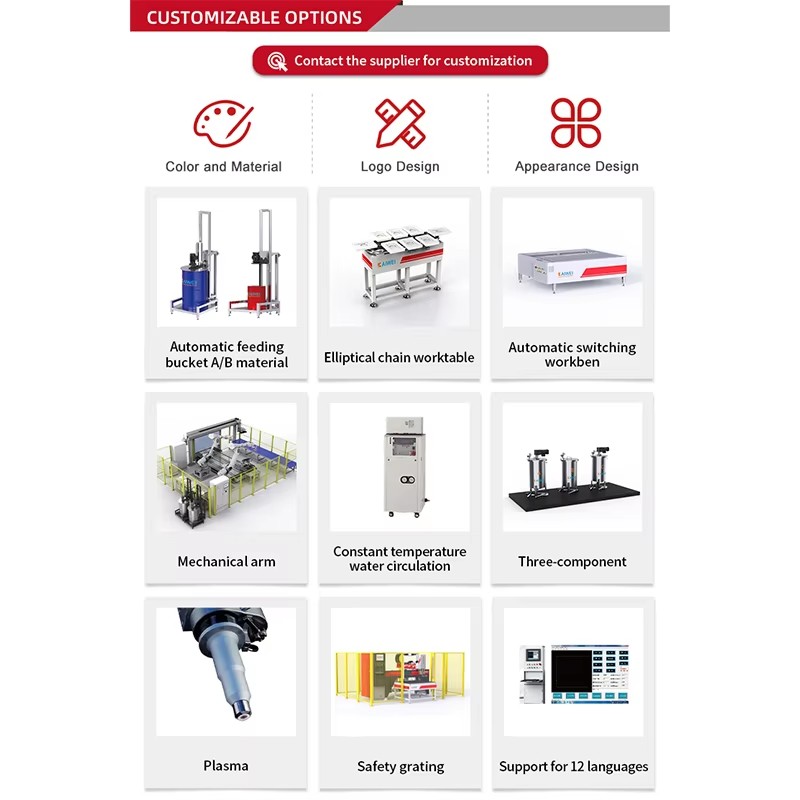
| Control architecture | 12.1-inch touch screen in a cantilever control box; PC or teach pendant operation; motion control card, or teach pendant + PLC; Xinje servo motor, Senad reducer |
| Travel speed | Programmed range 0–12,000 mm/min |
| Utilities | 220 V / 380 V, 4 kW / 5.5 kW; air pressure requirement ≥ 6 bar with oil-water separator |
| Listed machine dimension | 2000 × 1000 × 800 mm |
| Build materials | Carbon steel, stainless steel 304, or aluminum alloy |
The Working Envelope Defines the Part Family
At 2250 × 1250 mm, the XY stroke covers large cabinet doors, distribution-board covers, filter frames, lighting housings and automotive covers in one setup. The 200 mm Z stroke is the honest limit: this is a machine for flat and gently contoured workpieces. If the gasket has to run across several planes, around a deep return flange, or over a raised boss, the part is outside the three-axis assumption and belongs in a different conversation — KAIWEI positions its KW-526, which uses a six-axis linear robot arm with a customized stroke, for complex multi-plane sealing.
The Bead Range Defines the Gasket Design
The 4–30 mm strip, produced through the KW-900 pump-type mixing head, covers most enclosure and housing gaskets. Designs that fall outside it are not marginal cases: the KW-523 and KW-523A cover 2–10 mm and 10–60 mm ranges, and the KW-526 spans 2–60 mm. Fixing the gasket section before comparing machines prevents a quotation cycle that ends in a re-specification.
The Material System Defines the Chemistry
KW-510B is specified for polyurethane; the KW-523 and KW-523A additionally list silicone. Within the polyurethane route, the machine accepts two- or three-component systems at 1–10:1, with A 3 cc/r and B 0.6 cc/r metering pumps and two 40 L air-pressure tanks. Tank A is agitated and tank B is not, which matters when the A component carries filler or pigment that settles. Water temperature control is an option rather than standard equipment, so a project that depends on it should say so at the specification stage.
Control and Cleaning Define the Operating Routine
A 12.1-inch touch screen in a cantilever control box keeps the interface beside the work area, with PC or teach-pendant operation and a motion control card or teach pendant plus PLC architecture. Travel speed is programmed across a 0–12,000 mm/min range rather than fixed. High-pressure water cleaning, fed from a tap-water line with a front level sensor and outlet filtration, sets the daily routine between colour or material changes; the KW-900 head is designed for control-system parameter adjustment and simplified maintenance.
A Seven-Step Fit Check Before You Specify
- Measure the part with its fixture. Take the largest footprint including clamping, the diagonal, and the tallest point. Compare all three against 2250 × 1250 × 200 mm, then add the nozzle approach path. A part that fits the stroke but not the approach path will run slower than planned or not at all.
- Fix the gasket cross-section. Width must land inside 4–30 mm. Height and compression follow your enclosure design, not the machine. If the design calls for a bead below 4 mm, ask about the narrower models before negotiating anything else.
- Confirm the chemistry. Polyurethane only, two or three components, ratio inside 1–10:1. Check whether the A component needs agitation, whether a third component is required, and whether material temperature has to be held — the water temperature control is optional.
- Match the duty cycle. The recorded project profile is 24/7 continuous operation on an automatic line. That makes cleaning, mixing-head maintenance, pump choice between KAIWEI and Barmag, and remote support part of the technical decision rather than after-sales detail.
- Write the line interface down. Decide who owns the sequence — the line PLC or the machine controller — how programs are selected per part, and what signals are exchanged. The KW-510B offers a motion control card or teach pendant plus PLC architecture; the exact input/output scope belongs in the order documents.
- Clear the compliance scope in writing. Separate machine-level conformity from enclosure-level ratings, name the destination market, and state the ambient and material conditions at the installation point.
- Confirm services and acceptance. Verify 220 V or 380 V, 4 kW or 5.5 kW, air at 6 bar or above with an oil-water separator, a tap-water supply, and a 2000 × 1000 × 800 mm footprint. Agree how bead width and continuity will be measured on the first articles.
Six Project Types and What Each One Tests
The same machine meets very different production realities depending on the part. The table maps the project types in KAIWEI's application records to the specification points that decide success.
| Project type | Parts named in the records | Recorded requirement | KW-510B point to verify |
|---|---|---|---|
| Electrical control panels and distribution boards | Control panels, distribution boards, electrical enclosures, anti-explosion boxes | Dust-proof and explosion-proof sealing; 24/7 on an automatic gluing line; IP66 and explosion-proof requirement | Door flatness and corner continuity within the 4–30 mm bead |
| Explosion-proof electrical | Explosion-proof shells, explosion-proof light housings | Explosion-proof sealing for enclosures | Who validates the enclosure classification, and against which test |
| Air filters and filtration equipment | Air filters, air cleaning filters, percolator filters, purification room doors | Dust-proof sealing; high unit volumes | Narrow flanges against the 4 mm minimum bead; frame flatness |
| Home appliances | Refrigerator doors, purification room doors, appliance components | Dust-proof sealing; 24/7 automatic line operation | Cycle repeatability across high volumes; fixture handling |
| Lighting and LED | Street and stadium luminaires, explosion-proof lights, lamp covers, LED fittings | IP66 waterproof and explosion-proof sealing | Housing size against the envelope; bead path around corners and entries |
| Auto parts and components | Battery covers, inner door handles, mountings and fittings | IP66 waterproof and dust-proof sealing on an automatic line | Contour height, fixture design, and cycle time for each part number |
For panel work, the failure mode is rarely the straight run. It is the corner, where bead speed, material viscosity and the distance between nozzle and surface determine whether the gasket stays continuous. Because KW-510B travel speed is programmed across a 0–12,000 mm/min range rather than fixed, corner segments can be assigned their own speed; confirm how your specific controller handles this during the demonstration rather than assuming it from the datasheet.
For filters and small appliance parts, the constraint moves to the lower bead limit. A 4 mm minimum width suits most frame gaskets but leaves no margin for a design that assumed 2–3 mm. For lighting and explosion-proof housings, the geometry is usually inside the envelope while the sealing requirement is the strictest in the group — which is precisely where the boundary between machine performance and enclosure validation matters most.
KAIWEI's own case record for a US automotive OEM describes 20 units configured for a paint-shop application over a two-year period, with a recorded result of stable operation, IP66 waterproof and dust-proof sealing and high production efficiency, and highlights of high-precision dispensing, automatic production and customized gasket shape. It is a supplier record: useful as an indication of the application profile the equipment was configured for, not as an independent performance benchmark.
Where KW-510B Is Not the Right Answer
A fit guide is only useful if it says no cleanly. Four situations move a project away from this model:
- The bead falls outside 4–30 mm. Narrow profiles point to the KW-523 or KW-523A at 2–10 mm; wider profiles to the KW-523 or KW-523A at 10–60 mm, or the KW-526 at 2–60 mm.
- The material is silicone. KW-510B is specified for polyurethane. The KW-523 and KW-523A list polyurethane or silicone, which is the relevant difference if the chemistry is fixed.
- The gasket runs across several planes. A three-axis arm with a 200 mm Z stroke is the wrong tool for multi-plane sealing; the KW-526's six-axis arm and customized stroke exist for that geometry.
- Your requirement is certification of the machine itself for a hazardous atmosphere. Nothing in the material reviewed here documents that for the KW-510B. If your plant needs it, raise it as a separate technical query instead of assuming an enclosure-level explosion-proof requirement covers it.
Integration With an Automatic Gluing Line and 24/7 Duty
Continuous operation changes which specifications carry weight. Two 40 L tanks and manual or automatic filling determine how often an operator intervenes; an optional filling station removes part of that intervention but adds equipment to maintain. Manual or automatic air charging affects how consistently tank pressure is restored during a long shift. High-pressure water cleaning with a filtered tap-water supply becomes a shift routine rather than a maintenance item, and the KW-900 head's control-system parameter adjustment and simplified maintenance matter more at 168 operating hours per week than at 40.
Line integration is mostly an ownership question. The KW-510B supports a motion control card or a teach pendant plus PLC architecture, with PC or teach-pendant operation, so either the machine or the line can hold the sequence depending on the configuration ordered. What should be settled before signing: program selection per part number, the handshake signals between line and machine, what happens on a fault mid-bead, and whether remote support can reach the controller. KAIWEI lists remote support as its after-sales channel, which is workable for a plant with someone who can act on diagnostic instructions on site.
Environment and Compliance: What the Machine Can and Cannot Certify
KAIWEI reports CE certification for its equipment, and secondary reporting cites certificate MD-TCF-240307-55472 under Machinery Directive 2006/42/EC for the EU market. Ask for the certificate copy and check that its scope matches the model and configuration you are ordering; a certification reference in an article is not a substitute for the document itself.
The −20 to 40 °C figure in KAIWEI's application records is the working condition attached to those sealing projects. It is a project parameter, not a published ambient rating for the machine. Before installation, confirm both the ambient conditions at the cell and the temperature the material will see during storage, dosing and cure; the optional water temperature control is one lever on the second point but not a complete answer.
IP66 and explosion-proof requirements are enclosure outcomes. In practice that means three questions with three different owners: which gasket geometry and compression your design uses, which test method proves the rating, and who signs the declaration. The dispensing machine contributes repeatable bead placement and a documented bead width range; it does not confer the rating.
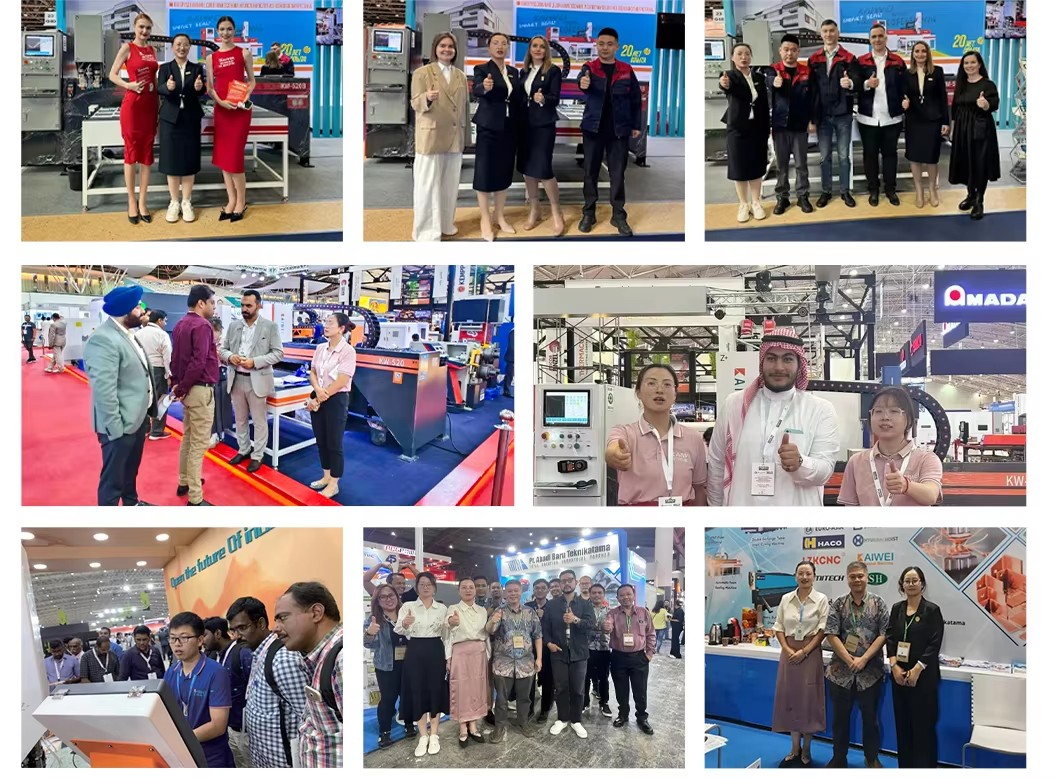
Market coverage deserves the same precision. KAIWEI's application records span projects in markets that include the United States, China, India, Japan and Italy, and its company profile lists Germany among its export markets. Those are coverage statements, not statements that one configuration satisfies every national conformity route. Name the destination market in the enquiry and let the applicable requirements be confirmed for that market.
Frequently Asked Questions
Does the KW-510B make an enclosure IP66 or explosion-proof?
No. The KW-510B dispenses a polyurethane gasket in the 4–30 mm range, and the enclosure rating is achieved by the combination of gasket geometry, compression, surface condition, closure hardware and the verification test applied to the finished box. KAIWEI's project records list IP66 waterproof and explosion-proof as requirements of the sealing project, not as properties of the dispensing machine. Treat machine specification and enclosure certification as two separate approval tracks with separate documentation.
Can the KW-510B run 24/7 inside an automatic gluing line?
KAIWEI's application records for these industries describe 24/7 continuous operation on an automatic production line, with an automatic gluing line as the matched equipment, and the machine offers a motion control card or teach pendant plus PLC architecture for sequence control. Continuous duty then depends on cleaning discipline, mixing-head maintenance, spare-part stocking and how the line handles faults. Confirm the integration scope and the maintenance interval in writing rather than inferring them from the duty description.
What configuration choices change the cost of a KW-510B project?
Cost follows scope, and published figures for this equipment class are not available in the material reviewed here. The variables that change scope are visible in the specification: two-component or three-component material system, KAIWEI or Barmag metering pumps, optional filling station, optional water temperature control, manual or automatic filling and air charging, and the build material — carbon steel, stainless steel 304, or aluminum alloy. Add installation, training, spare heads and the acceptance-test effort. Compare quotations only when these items are listed line by line.
Can we validate the gasket on our own parts before ordering a full line?
Validation should be built into the order rather than assumed. KAIWEI lists a minimum order quantity of 1 set and 100% testing, which allows a single machine to be ordered and proven on your own parts before a line is committed. Define the acceptance criteria first: bead width against the 4–30 mm range, continuity at corners, gasket height after cure, and cycle time on your fixture. Ask explicitly which test records accompany the machine.
What lead time and support are listed for the KW-510B?
KAIWEI's capability data lists a 7-day lead time, a 1-set minimum order quantity and 100% testing, with remote support as the after-sales channel. Treat the 7-day figure as a standard-condition value: options such as a filling station, water temperature control or a three-component package change the build, so request the schedule attached to your exact configuration. Sending the part drawing, gasket section, required output and destination market is enough for a fit review, and the company brochure is available for download: KAIWEI product brochure (PDF).
Conclusion: Four Conditions, Then a Demonstration
Matching the KW-510B to a sealing project comes down to four verifiable conditions — part inside 2250 × 1250 × 200 mm, gasket between 4 and 30 mm, polyurethane at 1–10:1 in two or three components, and a cell with 220/380 V, 6 bar air and water for cleaning — plus a compliance scope that names the enclosure rating as your responsibility and the machine conformity as the supplier's. Where those conditions hold, the model covers control panels, filters, appliances, lighting and automotive parts from a single platform, with an automatic gluing line interface and a 24/7 duty profile already reflected in its application records.
The fastest way to close the evaluation is a documented fit review: part drawing with dimensions, gasket cross-section, annual volume, hours per week, destination market, and whether the enclosure rating or the machine certification is the harder requirement. That set of six answers decides the configuration — and tells you early if the KW-510B is the wrong model for the job.
Have Questions or Need More Details?
Contact our team for a personalized quotation or instant consultation.
Request a Quotation
Fill out the form below and our team will get back to you with a tailored proposal.
WhatsApp Direct Chat
Prefer to chat in real-time? Message us on WhatsApp for instant assistance & quick answers.
- Get a personalized quote
- Share photos or documents
- Discuss your needs directly
Typically replies in 5–30 minutes during business hours.