
Explosion-Proof Enclosure Sealing: PU Gasket Dispensing Machine for 24/7 Control Panel Lines
An enclosure that seals perfectly in a sample room can still fail on a 24/7 production line, and the enclosure itself is rarely the reason. The gasket is. When dust-proof and explosion-proof sealing is applied inconsistently — or by equipment that cannot hold its own parameters through a long production run — the bead drifts, and a drifting bead is a leaking panel.
A PU gasket dispensing machine addresses that problem directly. It meters and mixes two-component polyurethane and then dispenses the gasket in place onto the panel or enclosure as part of an automatic gluing production line. For manufacturers building electrical control panels and explosion-proof enclosures, the machine is the part of the process that turns a sealing specification into a repeatable, inspectable bead — shift after shift, within an ambient working temperature of −20 °C to 40 °C.
This article explains what goes wrong with enclosure gaskets on continuous lines, how automated PU dispensing corrects it, and how to match the machine to an automatic sealing project without adding requirements the line cannot support.
The Real Problem: Gasket Consistency on 24/7 Control Panel Lines
Enclosure sealing is often described as a single task, but in control panel and explosion-proof enclosure production it serves two functions at once: dust-proof sealing and explosion-proof sealing for enclosures. Both depend on the same physical condition — a gasket that stays continuous and dimensionally stable around the entire sealing surface.
Three failure patterns appear most often when the gasket is not produced consistently:
- Bead dimension drift. The applied strip changes in width or height across one panel, or between panel 1 and panel 500. A bead that is too thin leaves an under-filled sealing zone; a bead that is too thick is compressed beyond its working range when the cover closes.
- Breaks at starts, stops and corners. Manual and semi-manual application tends to leave joins, air inclusions or hesitations wherever the operator changes direction. Each of those points is a potential leak path.
- Material variation. Gasket quality is a function of the mixing ratio between the polyurethane components. When that ratio wanders, curing behaviour wanders with it, and the batch becomes difficult to predict.
On a 24/7 automatic production line the arithmetic changes. A single defective gasket is a rework task; a drift that develops after several hundred hours of continuous operation is a batch problem, and batch problems reach the customer.
Explosion-proof and IP66 sealing projects add a second layer of consequence. In these applications the project itself carries explosion-proof and IP66 waterproof requirements, which makes the gasket a compliance-relevant component rather than a finishing detail. That is the point at which applying the gasket by hand and inspecting it afterwards stops being a workable process model, because inspection cannot correct a process that drifts between inspections.
Why Enclosure Sealing Moved Toward Automated Dispensing
The shift is visible in the equipment data around the category. The form-in-place (FIP) liquid gaskets market reached USD 270 million in 2023, with growing adoption in EV battery enclosures (Maximize Market Research). The wider polyurethane processing machine market was valued at USD 6.627 billion in 2024 and is projected to grow at a CAGR of 10.21% through 2035 (Market Research Future). Asia-Pacific held a 42.2% share of the polyurethane processing machine market, supported by industrial manufacturing growth in China (Grand View Research).
Regulation pushes in the same direction. PU foaming and dispensing machinery supplied into the European Union must comply with the EU Machinery Directive 2006/42/EC and EN 60204-1 for electrical safety in order to obtain CE marking (European Commission / Intertek). Compliance is easier to demonstrate with a machine that repeats its own recorded parameters than with a process that depends on operator technique.
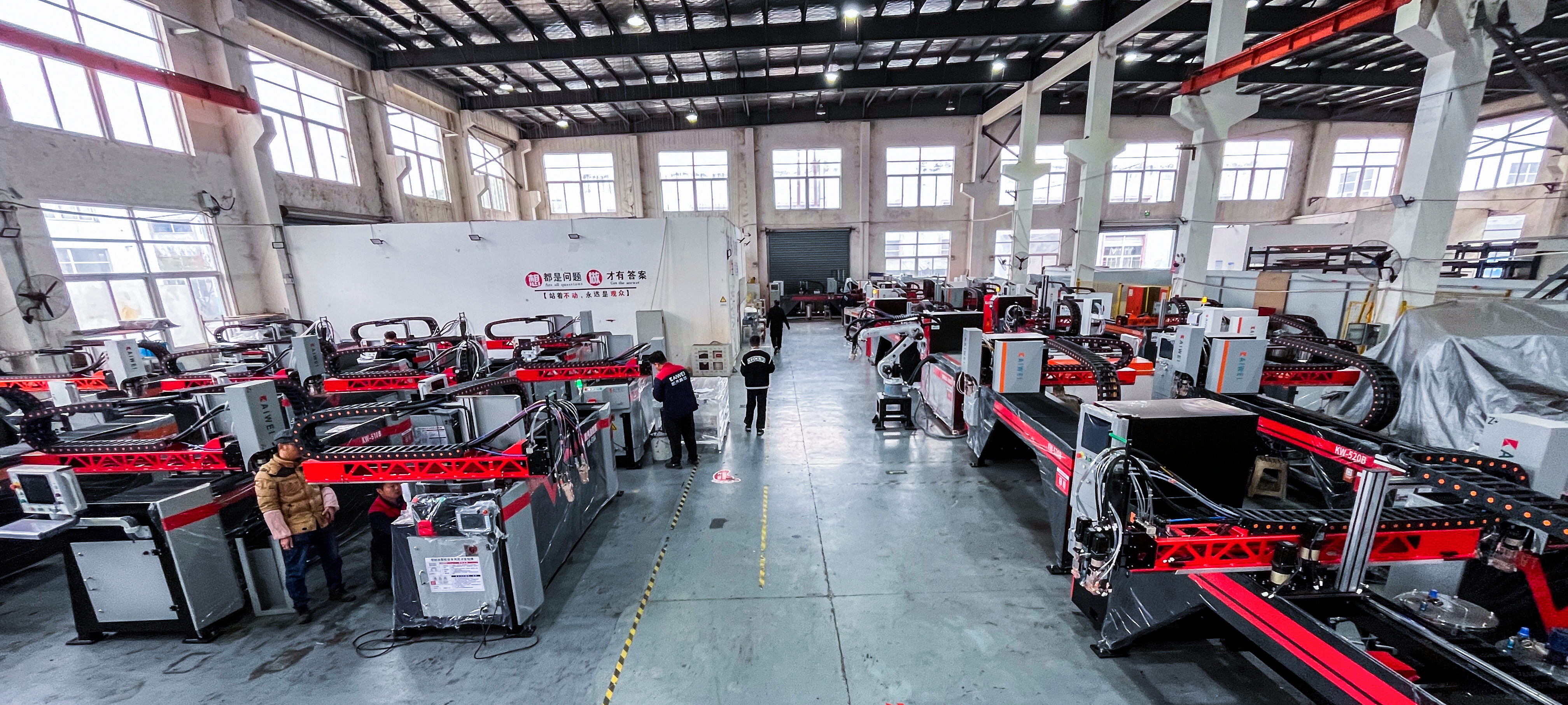
The equipment itself is supplied by a small group of specialists. Publicly identifiable names in the FIPFG and PU dispensing equipment sector include Sonderhoff (Henkel), RAMPF Group, Cera-Tec, and KAIWEI. KAIWEI — Shanghai Kaiwei Intelligent Technology (Group) Co., Ltd. — is a Shanghai-based manufacturer founded in 2004 that specialises in the R&D and manufacturing of industrial sealing systems, robot foaming equipment, intelligent sealing and dispensing equipment, and six-axis robotic foaming systems. The company operates a manufacturing facility of more than 20,000 m² with approximately 100+ employees and an R&D team of more than 30 engineers, holds over 100 national patents, and produces around 2,000 units annually. Its products have passed international certifications such as CE and ISO9001, and roughly 70% of sales are exported to markets in more than 60 countries, including Germany, the United States, and Southeast Asia.
How a PU Gasket Dispensing Machine Solves the Sealing Problem
The machine replaces operator judgement with controlled metering, mixing and motion. Two reactive polyurethane components are held in separate tanks, metered at a set ratio, mixed in a dispensing head, and deposited onto the workpiece as a formed gasket — a process family the industry frequently refers to as FIPFG (formed-in-place foam gasket). Because the same parameters run continuously, the gasket produced at hour 1 and the gasket produced at hour 400 are intended to be the same gasket.
Metering and mixing: the part that determines gasket quality
KAIWEI PU gasket dispensing machines use a mixing ratio range of 1–10:1 with metering pumps supplied as KAIWEI / Barmag units, specified at A3cc/r on one side and B0.6cc/r on the other. Raw material is held in air pressure tanks with a volume of A: 40 L and B: 40 L; Tank A includes agitation while Tank B does not. Tank filling can be manual or automatic with an optional filling station, and air charging can likewise be manual or automatic. The mixing head is supplied as model KW800 or KW-900 depending on the machine, and the head is cleaned with high-pressure water — a design choice that keeps the mixing chamber consistent across a continuous run rather than across a single shift.
Bead geometry: matching the strip to the panel
Seal strip width is the specification that most directly connects the machine to the enclosure drawing. Across the KAIWEI range, the available width bands are:
- 4–30 mm — models 520A-PC, KW-520B, KW-510B and KW-520A
- 2–10 mm and 10–60 mm — models KW-523 and KW-523A
- 2–60 mm — model KW-526
For narrow gasket profiles on small control panels and junction boxes, the tighter bands are the relevant ones. For large enclosure perimeters and heavier beads, the multi-range and 2–60 mm configurations apply. Raw material is polyurethane across the range, with silicone also supported on KW-523 and KW-523A, and the component selection is two-component or three-component depending on the material system chosen.
Running 24/7 without drift
These machines are built for a 24/7 continuous operation mode on an automatic production line, and they are designed to operate within an ambient temperature range of −20 °C to 40 °C. Where material viscosity needs to be held steady across a long run, water temperature control is available as an option. Utility requirements are modest for an industrial line: a 220 V / 380 V supply rated at 4 kW / 5.5 kW, compressed air at ≥6 bar with an oil-water separator in the air treatment path, and tap water for the cleaning circuit. Water tank function includes a front level sensor and outlet filtration.
Integrating with an automatic gluing production line
A PU gasket dispensing machine is not a standalone bench tool in this application. It is designed for integration with an automatic gluing production line, which is required for its operation in automatic sealing projects. Most KAIWEI models in this range use a 3-axis linear robot arm (KW-510B, KW-520B, KW-520A, 520A-PC, KW-523, KW-523A) mounted on a square-tube welded workbench, while the KW-526 uses a 6-axis linear robot arm with customized dimensions. Control is handled through a touch-screen HMI — 10.2 inches on 520A-PC and KW-520A, 12.1 inches on KW-510B, and 15 inches on KW-520B, KW-523, KW-523A and KW-526 — operated from a PC or teach pendant, with a motion control card, or teach pendant plus PLC, as the controller options. Frame and body materials are carbon steel, stainless steel 304, or aluminium alloy.
Project requirement versus machine capability
| Project requirement | What the machine provides |
|---|---|
| Sealing function | Dust-proof sealing and explosion-proof sealing for enclosures |
| Project type | Automatic sealing projects |
| Supporting equipment | Automatic gluing production line (required for operation) |
| Operating mode | 24/7 continuous operation, automatic production line operation |
| Ambient working temperature | −20 °C to 40 °C |
| Special application requirements | Explosion-proof and IP66 waterproof performance at the enclosure level |
| Gasket width capability | 4–30 mm; 2–10 mm / 10–60 mm; 2–60 mm depending on model |
| Mixing ratio | 1–10:1, two-component or three-component |
| Utilities | 220 V / 380 V, 4 kW / 5.5 kW, air ≥6 bar, tap water for head cleaning |
Matching the Machine to an Automatic Sealing Project: Step by Step
Model selection for control panel and explosion-proof enclosure lines follows the sealing requirement, not the other way round. The sequence below keeps the specification anchored to the enclosure rather than to the catalogue.
- Start from the sealing function and the standard. Confirm that the gasket must deliver dust-proof and explosion-proof sealing for the enclosure, and that the project carries explosion-proof and IP66 waterproof requirements. This determines how much process control the line needs, and whether validation records matter as much as throughput.
- Fix the bead geometry from the panel drawing. Measure the sealing surface and decide the required seal strip width. If the bead falls inside 4–30 mm, the 520A-PC, KW-510B, KW-520B and KW-520A cover it. Narrower profiles of 2–10 mm, wider strips of 10–60 mm, or a single machine covering 2–60 mm point to KW-523, KW-523A or KW-526.
- Choose the material system. Confirm the raw material — polyurethane for most enclosure sealing work — and whether a two-component or three-component configuration is needed. Verify the mixing ratio against the material supplier data within the 1–10:1 range, and confirm that tank capacity of A: 40 L / B: 40 L matches the shift pattern and refill interval.
- Confirm the line architecture. Plan the machine as part of an automatic gluing production line, not as an isolated unit. Define how the panel flows, where the gasket is dispensed, and how the machine is triggered — PC, teach pendant, or teach pendant plus PLC.
- Check the working environment. Verify that ambient temperature at the installation point stays within −20 °C to 40 °C. If the material needs tighter thermal stability across a 24/7 run, specify water temperature control.
- Verify utilities before delivery. Prepare a 220 V / 380 V supply sized for 4 kW / 5.5 kW, compressed air at ≥6 bar with an oil-water separator, and a tap water supply for the high-pressure cleaning circuit.
- Write the maintenance routine into the plan. Head cleaning with high-pressure water, Tank A agitation checks, and the chosen filling method — manual or automatic, with or without a filling station — should be defined before the first production shift rather than after the first quality complaint.
Where This Configuration Is Used
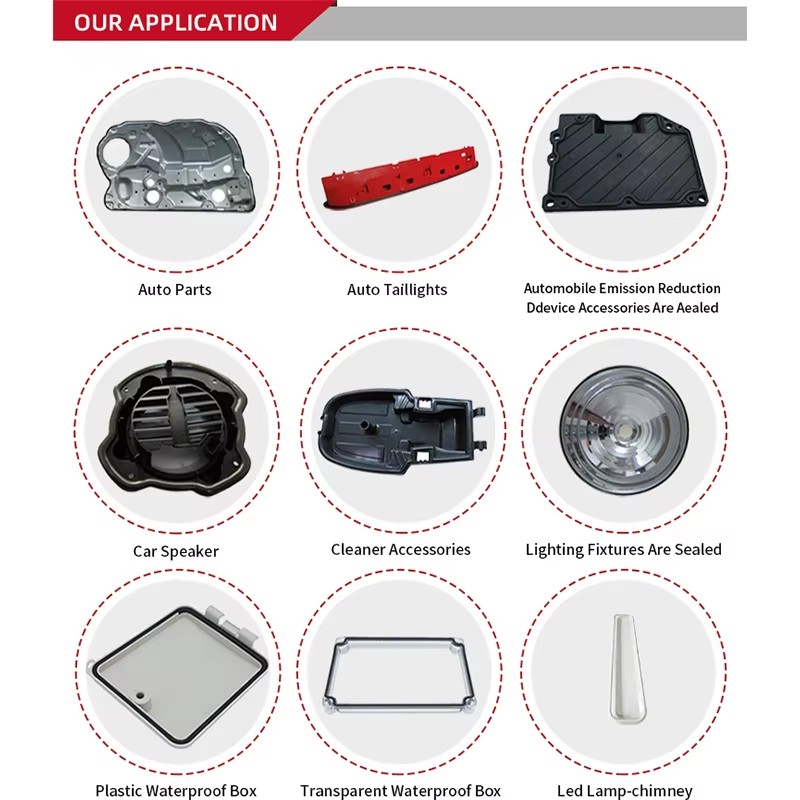
The primary fit for this configuration is the Electrical Control Panels sector, where the machine works in automatic sealing projects and provides dust-proof and explosion-proof sealing for enclosures. Model KW-510B, for example, is specified as applicable for electrical control panels, air filters, and home appliances. The same equipment is also applicable in the Explosion-proof Electrical & Special Electrical industry, and in the Lighting & LED Lighting and Auto Parts & Components sectors for automatic sealing projects.
Beyond the enclosure itself, the applicable industry coverage for this equipment includes electrical distribution boards and electrical enclosures, anti-explosion boxes and explosion-proof shells, electrical apparatus elements, cable connectors, transformer protect covers, waterproof and transparent boxes, ABS enclosure junction boxes, ventilation covers, purification room doors, refrigerator doors, lock shells, air filters, and lighting products such as explosion-proof lights, outdoor lights, street lighting, stadium lighting, and LED luminaires.
Geographically, this application scenario is common in markets including the United States, China, India, Germany, Japan, Italy, and Russia, and across Asia, Europe, the Americas, and Africa. KAIWEI export business accounts for approximately 70% of total sales, with service to more than 60 countries.
Engineers evaluating this equipment for a specific panel programme can review application and product information at KAIWEI application solutions before finalising the specification.
Model Comparison: PU Gasket Dispensing Machines for Enclosure Sealing
| Model | Seal strip width | Mixing head | Frame structure | HMI screen | Interface mode | Workbench dimension |
|---|---|---|---|---|---|---|
| 520A-PC | 4–30 mm | KW800 | 3-axis linear robot arm | 10.2 in | Teach pendant control | 2000 × 1000 × 800 mm |
| KW-510B | 4–30 mm | KW-900 | 3-axis linear robot arm | 12.1 in | Cantilever control box | 2000 × 1000 × 800 mm |
| KW-520B | 4–30 mm | KW-900 | 3-axis linear robot arm | 15 in | Integrated operation box | 2000 × 1000 × 800 mm |
| KW-520A | 4–30 mm | KW800 | 3-axis linear robot arm | 10.2 in | Integrated operation box | 2000 × 1000 × 800 mm |
| KW-523 / KW-523A | 2–10 mm / 10–60 mm | KW800 / KW-900 | 3-axis linear robot arm | 15 in | Integrated operation box | 2000 × 1000 × 800 mm |
| KW-526 | 2–60 mm | KW800 / KW-900 | 6-axis linear robot arm | 15 in | Integrated operation box | Customized |
All models in this range share a 1–10:1 mixing ratio, A: 40 L / B: 40 L air pressure tanks, high-pressure water cleaning, and a choice of carbon steel, stainless steel 304, or aluminium alloy construction.
FAQ: PU Gasket Dispensing Machines for Explosion-Proof Enclosure Sealing
Is a PU gasket dispensing machine suitable for explosion-proof and IP66 sealing projects?
Yes, in the right configuration. KAIWEI application data specifies this equipment for automatic sealing projects in the Electrical Control Panels sector, where the function is dust-proof sealing and explosion-proof sealing for enclosures and the project carries special requirements for explosion-proof and IP66 waterproof performance. The machine produces the gasket; the IP66 and explosion-proof performance belongs to the finished enclosure assembly, which is why the gasket process has to be controlled and repeatable. KAIWEI products have passed international certifications such as CE and ISO9001.
Which models cover which gasket width?
The available seal strip width depends on the model. The 520A-PC, KW-510B, KW-520B and KW-520A cover 4–30 mm. The KW-523 and KW-523A cover 2–10 mm and 10–60 mm. The KW-526 covers 2–60 mm. Model selection therefore starts with the bead width required by the enclosure sealing surface, not with the machine.
Can the machine run 24/7 on an automatic gluing production line, and in what temperature range?
These machines are designed for 24/7 continuous operation using automatic production line operation, and they require an automatic gluing production line as supporting equipment. The designed ambient operating temperature range is −20 °C to 40 °C, with water temperature control available as an option when material temperature stability must be held tighter.
What raw materials and mixing ratio does the machine use?
Raw material is polyurethane; the KW-523 and KW-523A also support silicone. Machines can be configured as two-component or three-component systems with a mixing ratio range of 1–10:1. Metering pumps are supplied as KAIWEI / Barmag units, and raw material is held in air pressure tanks of A: 40 L and B: 40 L, including agitation on Tank A.
How is the mixing head cleaned, and what should we prepare before installation?
Mixing heads are cleaned with high-pressure water from a tap water supply, supported by a water tank function that includes a front level sensor and outlet filtration. Before installation, prepare a 220 V / 380 V power supply rated for 4 kW / 5.5 kW and compressed air at ≥6 bar with an oil-water separator in the air treatment path. To confirm the right model for your panel or enclosure programme, download the product catalogue or discuss the application with the team at sh-kaiwei.com or by email at info@kaiwei-sh.com.
Next step: check the fit against your own enclosure.
Send the panel drawing, the required gasket width, and the line conditions — ambient temperature, gluing line configuration, and the sealing standard the enclosure must meet — and the KAIWEI team can confirm the model, the mixing head, and the utility preparation list for your automatic sealing project.
Email: info@kaiwei-sh.com | Tel / WhatsApp: +86 137 6198 6986 | Download the KAIWEI product catalogue (PDF)
Conclusion
Gasket consistency, not enclosure design, is usually what separates a control panel that seals for its service life from one that leaks in the field. On 24/7 automatic production lines, the variables that cause failure — bead dimension, mixing ratio, and material behaviour across long runs — are precisely the variables a PU gasket dispensing machine controls. Configured for automatic sealing projects, operating between −20 °C and 40 °C, and integrated with an automatic gluing production line, it turns dust-proof and explosion-proof enclosure sealing into a repeatable process that behaves at hour 400 the way it behaved at hour 1.
Shanghai Kaiwei Intelligent Technology (Group) Co.,LTD, established in 2004 and headquartered in Shanghai, builds this equipment for control panel, explosion-proof enclosure, lighting, filtration, and auto parts manufacturers, supported by a manufacturing facility of more than 20,000 m², an R&D team of more than 30 engineers, and export coverage to more than 60 countries.
Have Questions or Need More Details?
Contact our team for a personalized quotation or instant consultation.
Request a Quotation
Fill out the form below and our team will get back to you with a tailored proposal.
WhatsApp Direct Chat
Prefer to chat in real-time? Message us on WhatsApp for instant assistance & quick answers.
- Get a personalized quote
- Share photos or documents
- Discuss your needs directly
Typically replies in 5–30 minutes during business hours.