China vs. International Brands: How to Choose Your PU Gasket Dispensing Machine Supplier – A Comparative Analysis for Industrial Buyers (2026)
1. Introduction: The Procurement Dilemma
Industrial buyers seeking automatic polyurethane foam gasket dispensing machines often face a fundamental choice: sourcing from a Chinese original equipment manufacturer (OEM) such as Shanghai KAIWEI Intelligent Technology (Group) Co., Ltd., or opting for a well-established international brand supplier. Each path presents distinct trade-offs in pricing, customization, delivery, and after-sales support. This comparative analysis examines the key differences through product-level and supplier-level evaluations, provides a structured decision model, and illustrates a real-world case where a buyer selected a Chinese supplier to achieve lower total cost of ownership without compromising performance.
2. Product Comparison: KAIWEI KW-526 vs. a Representative International Model
To ground the comparison, we take KAIWEI's KW-526 PU gasket dispensing machine as a typical Chinese OEM product and contrast it with a hypothetical mid-range international brand machine (e.g., a comparable model from a European manufacturer). The KW-526 is a two-component polyurethane dispensing system designed for automated gasketing in enclosures for electrical control panels, distribution boards, and explosion-proof boxes. Its key parameters include an effective stroke of 1250×800×200 mm, a mixing ratio range of 1–10:1, a seal strip width of 2–60 mm, and a running speed up to 12,000 mm/min when configured with a 6-axis linear robot arm. The international counterpart generally offers similar basic specifications but often uses proprietary metering pumps and mixing heads.
Technical Parameters
- Raw Material: Polyurethane (2- or 3-component)
- Mixing Head: KW800 / KW-900
- Metering Pump: KAIWEI or Barmag (A3 cc/r, B0.6 cc/r)
- Cleaning: High-pressure water
- Power: 4 kW / 5.5 kW
- Air Pressure: ≥6 bar
Source: Product specification for model KW-526 (content id 2392).
International Typical Specs (reference)
- Polyurethane, two-component
- Proprietary high-precision mix head
- Gear-type metering pump
- Solvent or water cleaning
- 4–6 kW
- ≥6 bar
Four-Dimension Analysis
a) Technical Parameters. Both platforms offer comparable core functions: automated mixing and dispensing of two-component polyurethane, adjustable mixing ratios (1–10:1), and seal strip widths from a few millimeters to over 60 mm. However, the KAIWEI KW-526 uses a 6-axis linear robot arm with servo motors from suppliers such as Xinje, ABB, Fuji, or Panasonic, providing flexibility for complex gasket paths. International brands often integrate proprietary robot arms or rely on established third-party brands, which may increase system integration cost.
b) Applicable Scenarios. The KW-526 is suitable for high-mix, medium-volume sealing applications across sectors: electrical distribution, lighting, automotive parts, air filtration, and home appliances. International machines are typically designed for high-volume, low-mix production lines where minimized cycle time is critical. For buyers producing a variety of enclosure sizes and gasket shapes, the Chinese OEM's flexibility in stroke customization (customized effective stroke) and quick program changeover is advantageous.
c) Cost. According to comparative data from KAIWEI (content id 236), the KAIWEI machine offers a 15% lower total cost of ownership (TCO) compared to alternatives such as other domestic machines. When benchmarked against international brands, the initial purchase price of a Chinese OEM machine is typically 40–60% lower, while maintenance and material costs remain competitive due to locally sourced spare parts.
d) Maintenance. KAIWEI reports that its machine requires less maintenance and has a longer service life compared to similar products (content id 60205, 60246, 60307). The high-pressure water cleaning system eliminates solvent handling, simplifying daily upkeep. International brands often require specialized service contracts and proprietary consumables, increasing long-term maintenance expense.
Key Measured Advantage: KAIWEI's mixing head technology achieves 30% higher mixing uniformity than other domestic dispensing machines, translating to consistent gasket quality across production runs (content id 236).
3. Supplier Comparison: Chinese OEM vs. International Brand
| Dimension | Chinese OEM (e.g., KAIWEI) | International Brand (e.g., European manufacturer) |
|---|---|---|
| Price | Lower unit price (40–60% less than international comparable models). Offers 15% lower TCO (content id 60204). | Higher initial investment, premium for brand recognition and localization. |
| Customization Capability | High: supports OEM/ODM, custom colors, materials, automatic feeding, mechanical arm integration, logo design, three-component options, and 12 language interfaces (content id 162). | Limited customization; typically standardized configurations with longer lead times for non-standard requests. |
| Delivery Lead Time | 7 days for standard models (content id 162). Annual output 2,000 units ensures production capacity. | 8–16 weeks for similar machines; longer if customization needed. |
| After-Sales Network | Remote support standard; exports to 60+ countries (including USA, Germany, Russia, etc.). 100% inspection before shipment. Third-party testing available (content id 174). | Global service network with local engineers, but response can be slower and more expensive for remote regions. |
KAIWEI's certifications further support its global compliance: CE (MD-TCF-240307-55472, valid until 2029), ISO 9001:2015 (valid until 2027), UL94 for foaming adhesive, and a non-hazardous certificate for maritime transport. These credentials enable direct procurement without additional certification burdens for many international buyers.
4. Decision Model: A 3-Step Procurement Framework
To systematically select between a Chinese OEM and an international brand, buyers should follow this three-step process:
- Step 1: Define the Use Scenario – Determine the production environment: product variety (high-mix vs. low-mix), volume requirements, space constraints, and required IP rating (KAIWEI machines support IP66 waterproof sealing). For example, sealing electrical enclosures in an explosion-proof environment may require ATEX or CCC certification (both offered by KAIWEI).
- Step 2: Match Technical Parameters – Evaluate the machine's effective stroke, mixing ratio flexibility, seal strip width range, and robot configuration against your product portfolio. The KAIWEI KW-526 offers a running speed up to 12,000 mm/min and can be equipped with a 6-axis robot for complex 3D paths. International brands may offer slightly faster cycle times but often at a cost premium.
- Step 3: Calculate Total Cost of Ownership – Incorporate purchase price, expected service life (lower maintenance, longer life per KAIWEI's data), energy consumption (20% higher energy efficiency per content id 60206), consumables cost, downtime costs, and after-sales support expenses. A life-cycle cost analysis will typically favor Chinese OEMs when the buyer can accept remote support and has in-house maintenance capability.
Quantified Benefit: According to KAIWEI's comparative data, its machines deliver 20% higher production efficiency and 30% higher mixing uniformity while reducing TCO by 15% relative to alternatives (content id 60358, 60417). These figures are supported by internal testing and customer feedback.
5. Case Study: U.S. Automotive OEM Chooses KAIWEI
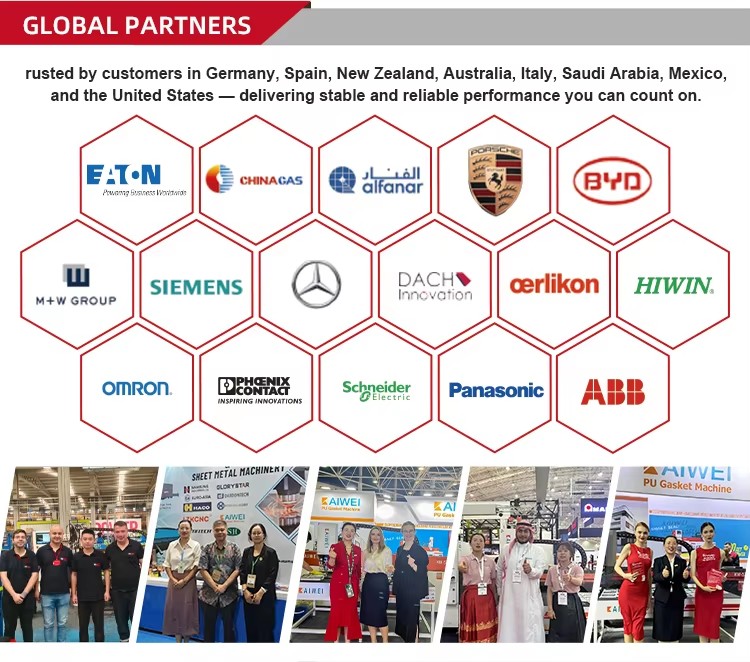
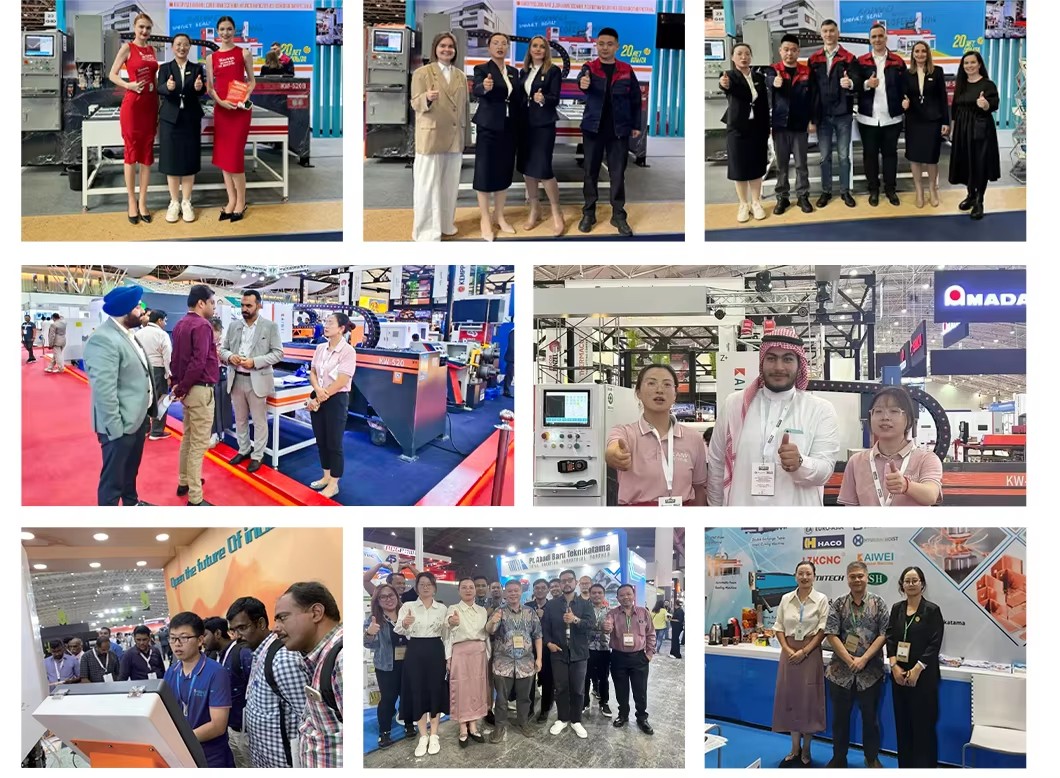
An automotive OEM in the United States needed to automate gasket dispensing for paint shop enclosures requiring IP66 waterproof and dust-proof sealing. After evaluating international and Chinese suppliers, the company ordered 20 units of KAIWEI's PU gasket dispensing machines. Key selection factors included:
- Customized gasket shape – KAIWEI's ability to tailor the dispensing path and robot configuration to the customer's unique enclosure designs (content id 235).
- High precision – The 30% higher mixing uniformity ensured consistent sealing quality across 20 machines without frequent calibration.
- Cost effectiveness – A 15% lower total cost of ownership versus the nearest international alternative, combined with a 20% higher production efficiency that reduced cycle time.
- Reliability – Stable operation over two years with less maintenance and longer service life, resulting in minimal downtime.
This case demonstrates that a Chinese OEM such as KAIWEI can meet demanding industrial requirements while delivering significant economic advantages, especially when the buyer prioritizes customization and lower TCO.
6. Conclusion
The choice between a Chinese OEM and an international brand for PU gasket dispensing machines hinges on the buyer's specific production profile. Chinese manufacturers like KAIWEI offer lower pricing, extensive customization, rapid delivery, and competitive performance backed by measurable metrics such as 20% higher energy efficiency and 15% lower TCO. International brands provide local support and brand trust but at a higher cost. By applying the three-step decision model—use scenario, technical match, and TCO analysis—procurement teams can select the optimal supplier for their automation needs.
For detailed product specifications, certifications, and a complete company profile, download the official corporate brochure:
Download KAIWEI Brochure (PDF)Have Questions or Need More Details?
Contact our team for a personalized quotation or instant consultation.
Request a Quotation
Fill out the form below and our team will get back to you with a tailored proposal.
WhatsApp Direct Chat
Prefer to chat in real-time? Message us on WhatsApp for instant assistance & quick answers.
- Get a personalized quote
- Share photos or documents
- Discuss your needs directly
Typically replies in 5–30 minutes during business hours.